
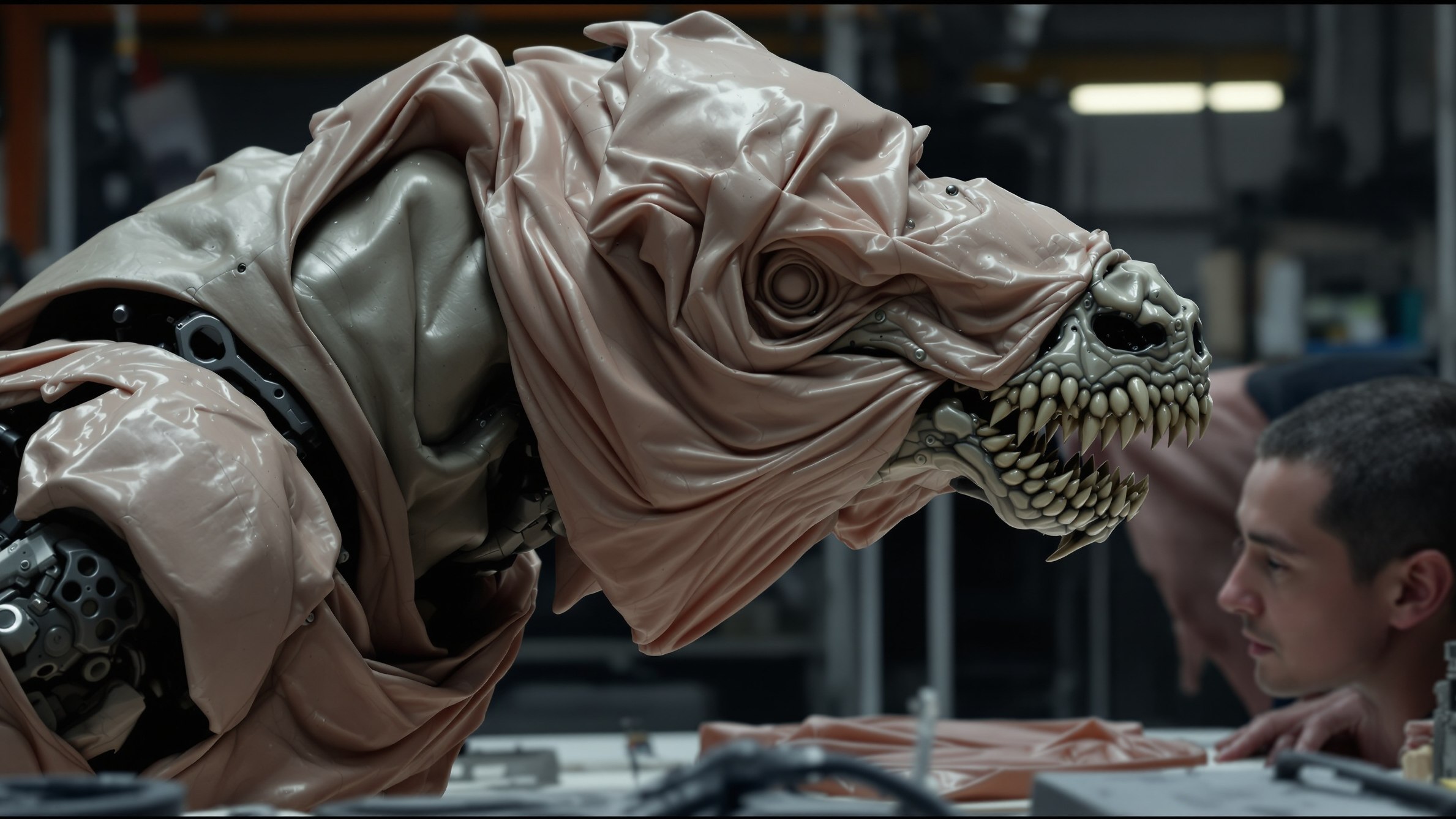
Materials and Skins sit at the intersection of engineering precision and visual storytelling in the world of animatronics. This subcategory on Animatronics Street explores the surfaces that bring mechanical creations to life—where metal frames disappear beneath lifelike textures, expressive finishes, and carefully engineered outer layers. From flexible silicones and foams to advanced composites, latex alternatives, and durable skin systems designed for high-motion environments, these materials define how an animatronic looks, moves, and endures over time. Within Animatronics Galleries, Materials and Skins dives deep into how texture, elasticity, translucency, and durability are balanced to achieve realism, character accuracy, and long-term performance. You will discover how skin systems are sculpted, layered, tinted, reinforced, and maintained, as well as how material choices impact motion range, wear resistance, and environmental stability. Whether used in theme parks, film productions, museums, or interactive installations, animatronic skins are as much a technical solution as they are an artistic craft. This collection of articles reveals the science, artistry, and innovation behind the surfaces that transform mechanical builds into believable characters.
A: Platinum-cure silicone with layered pigmentation.
A: Typically 3–10 years depending on use and environment.
A: Minor tears can be patched; major damage often requires recasting.
A: UV, heat, and plasticizer loss.
A: Silicone is water-resistant, seams are the weak point.
A: Yes, heavier skins slow response.
A: Only if mount geometry matches.
A: Through layered intrinsic pigments and surface washes.
A: Mouth corners and eyelids.
A: After final skin installation.
Best Materials for Animatronic Skin: Silicone vs Latex vs Foam
Best Materials for Animatronic Skin: Silicone vs Latex vs Foam opens the workshop view of animatronics with practical explanations, real build logic, and clear guidance for making engineered movement feel alive.

How to Choose Realistic Animatronic Skin Materials for Lifelike Movement
How to Choose Realistic Animatronic Skin Materials for Lifelike Movement opens the workshop view of animatronics with practical explanations, real build logic, and clear guidance for making engineered movement feel alive.
Silicone Animatronic Skins Explained: Pros, Cons, and Applications
Silicone Animatronic Skins Explained: Pros, Cons, and Applications opens the workshop view of animatronics with practical explanations, real build logic, and clear guidance for making engineered movement feel alive.
Latex vs Silicone in Animatronics: Which Material Performs Better?
Latex vs Silicone in Animatronics: Which Material Performs Better? opens the workshop view of animatronics with practical explanations, real build logic, and clear guidance for making engineered movement feel alive.

What Makes Animatronic Skin Look Real? Materials, Textures, and Techniques
What Makes Animatronic Skin Look Real? Materials, Textures, and Techniques opens the workshop view of animatronics with practical explanations, real build logic, and clear guidance for making engineered movement feel alive.
