
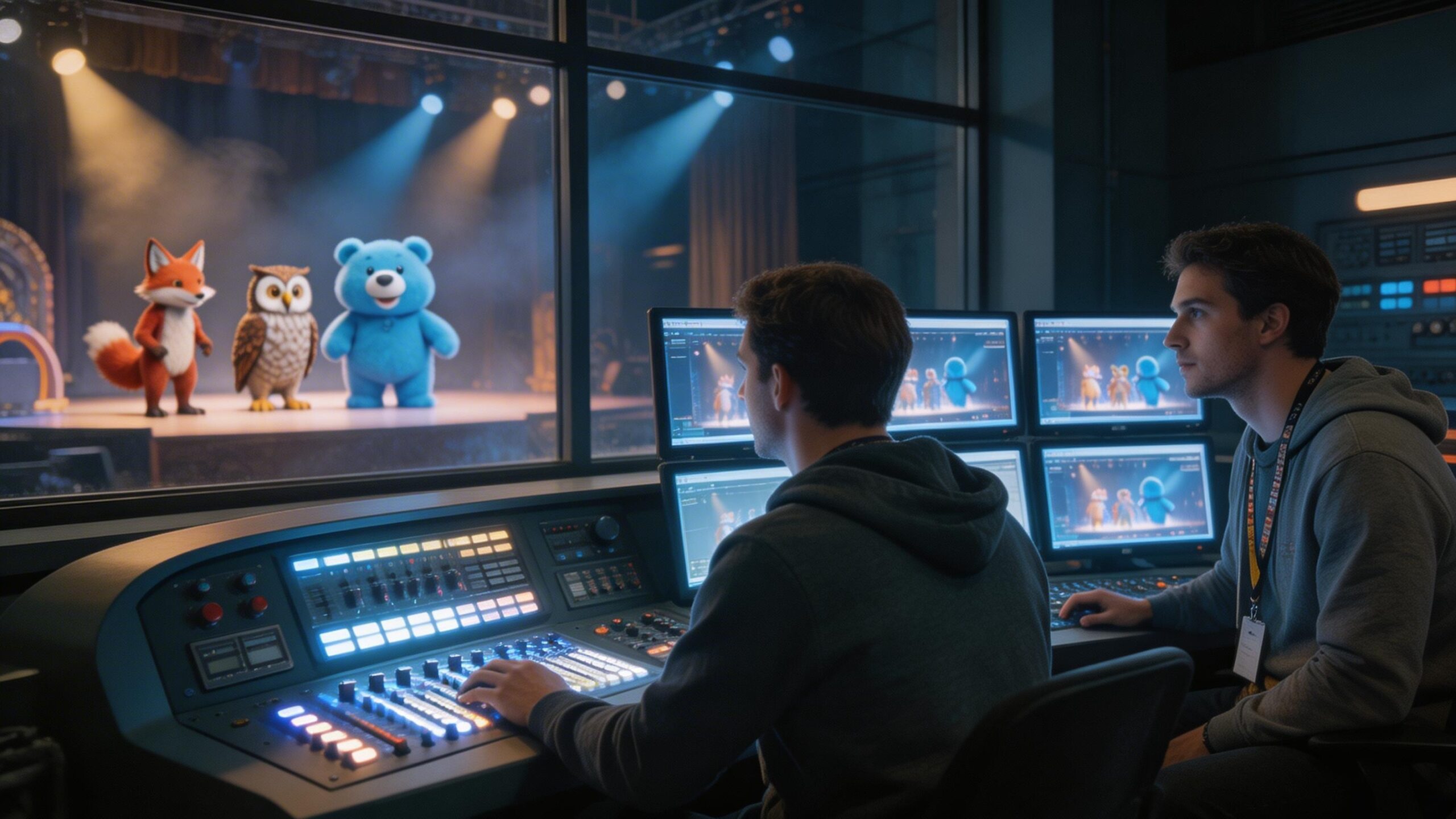
Show control systems are the digital conductors behind the magic of modern animatronics, orchestrating motion, lighting, sound, and special effects into perfectly timed experiences. At Animatronics Street, the Show Control Systems section explores the powerful technology that allows animatronic characters, themed attractions, and immersive exhibits to move with lifelike precision and cinematic coordination. From sophisticated motion programming and networked controllers to real-time synchronization between audio tracks, sensors, lighting cues, and servo-driven mechanisms, show control software transforms complex mechanical systems into seamless storytelling machines. Whether used in theme parks, museums, film production, robotics labs, or stage entertainment, these systems are the backbone that keeps every movement perfectly on cue. In this collection of expert articles, you’ll discover how engineers design reliable control architectures, how programmers build motion sequences and trigger events, and how modern platforms integrate with robotics, AI, and interactive technologies. If you want to understand the technology that makes animatronics feel alive, this hub dives deep into the tools, techniques, and innovations shaping the future of show control.
A: A centralized platform that synchronizes lighting, audio, animatronics, and special effects.
A: Timecode keeps multiple systems perfectly synchronized to audio or video playback.
A: Yes—industrial PLCs provide reliable control for motors, valves, and sensors.
A: Sensors like motion detectors, pressure plates, or RFID readers activate cues.
A: Ethernet-based systems using protocols like Art-Net, sACN, or OSC.
A: Yes—many installations run scheduled sequences with automatic resets.
A: Redundant backup controllers often take over to keep the show running.
A: Many modern installations allow technicians to monitor systems remotely.
A: Large theme park attractions may control hundreds of devices simultaneously.
A: Knowledge of programming, networking, electronics, and mechanical systems.