
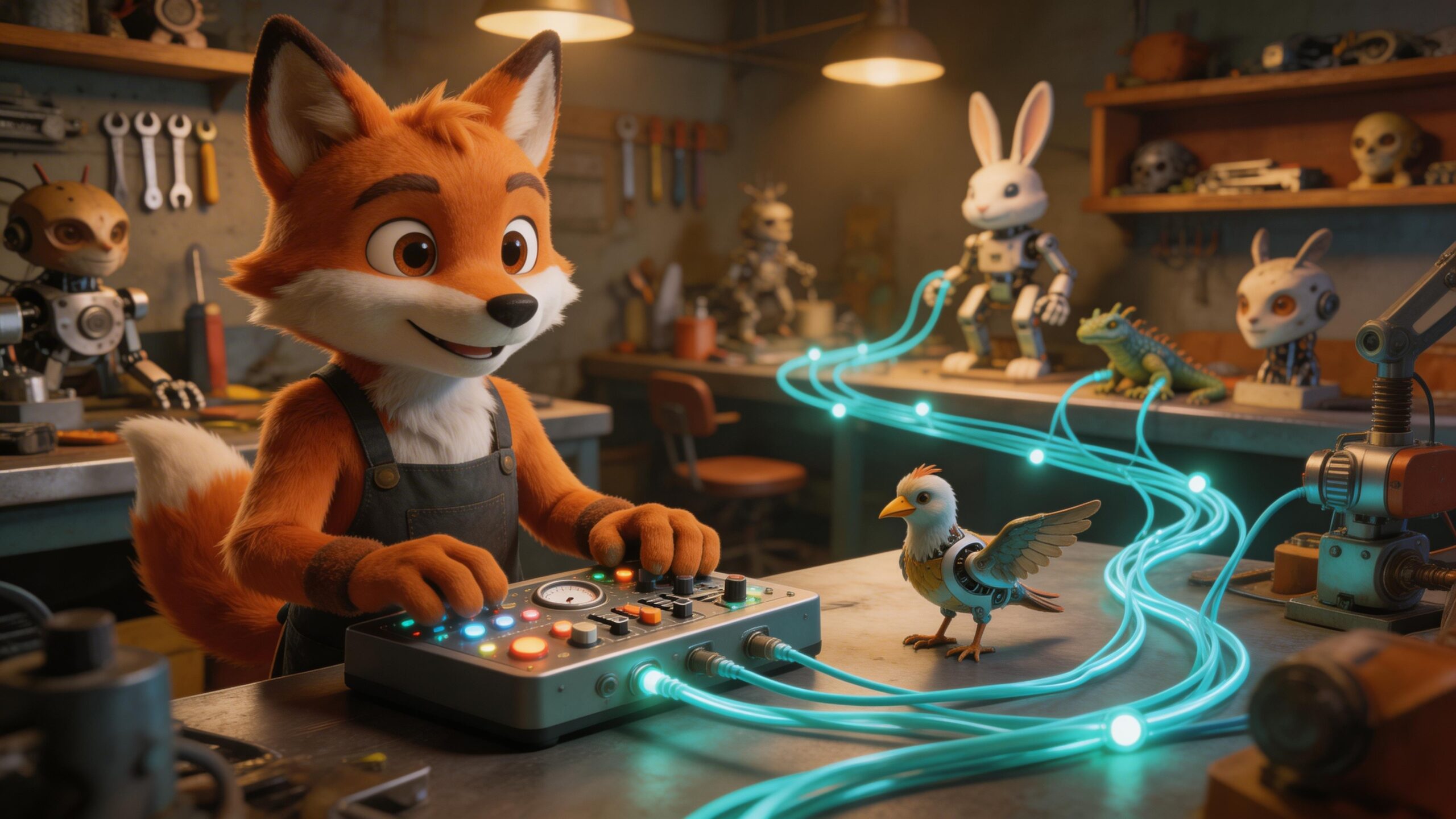
Behind every lifelike animatronic movement is a powerful digital conversation happening beneath the surface. The Networking and Protocols section of Animatronics Street explores the communication systems that allow controllers, sensors, lighting rigs, and motion devices to work together with precision and reliability. From industry standards like DMX, CAN bus, Ethernet, and serial protocols to modern IP-based show control networks, these technologies form the backbone of coordinated animatronic performance. Whether you are building a small hobby project or engineering a large-scale themed attraction, understanding how devices exchange data, synchronize motion cues, and maintain stable communication is essential for smooth operation. This subcategory dives deep into the architecture, hardware interfaces, and software frameworks that power real-time control systems in animatronics. You’ll discover how network topologies influence performance, how protocols manage timing and device addressing, and how engineers design scalable systems capable of controlling dozens—or even hundreds—of moving elements. If you want your animatronic creations to move, react, and perform seamlessly, mastering networking and protocols is where the real magic begins.
A: Ethernet supports faster speeds, larger networks, and modern protocols used in show control systems.
A: Art-Net and sACN are the most common for transmitting DMX data over IP.
A: Systems often use SMPTE timecode or MIDI signals distributed over the network.
A: Wired connections are preferred, though wireless can work for mobile props or roaming robots.
A: Redundant network paths and failover systems can maintain communication.
A: They allow traffic prioritization, monitoring, and network segmentation.
A: It is the delay between sending and receiving a command across the network.
A: Large theme parks may operate networks with hundreds of devices.
A: Accurate timing ensures motion, lighting, and sound remain perfectly coordinated.
A: Yes, mirrored servers are often used to provide redundancy.