
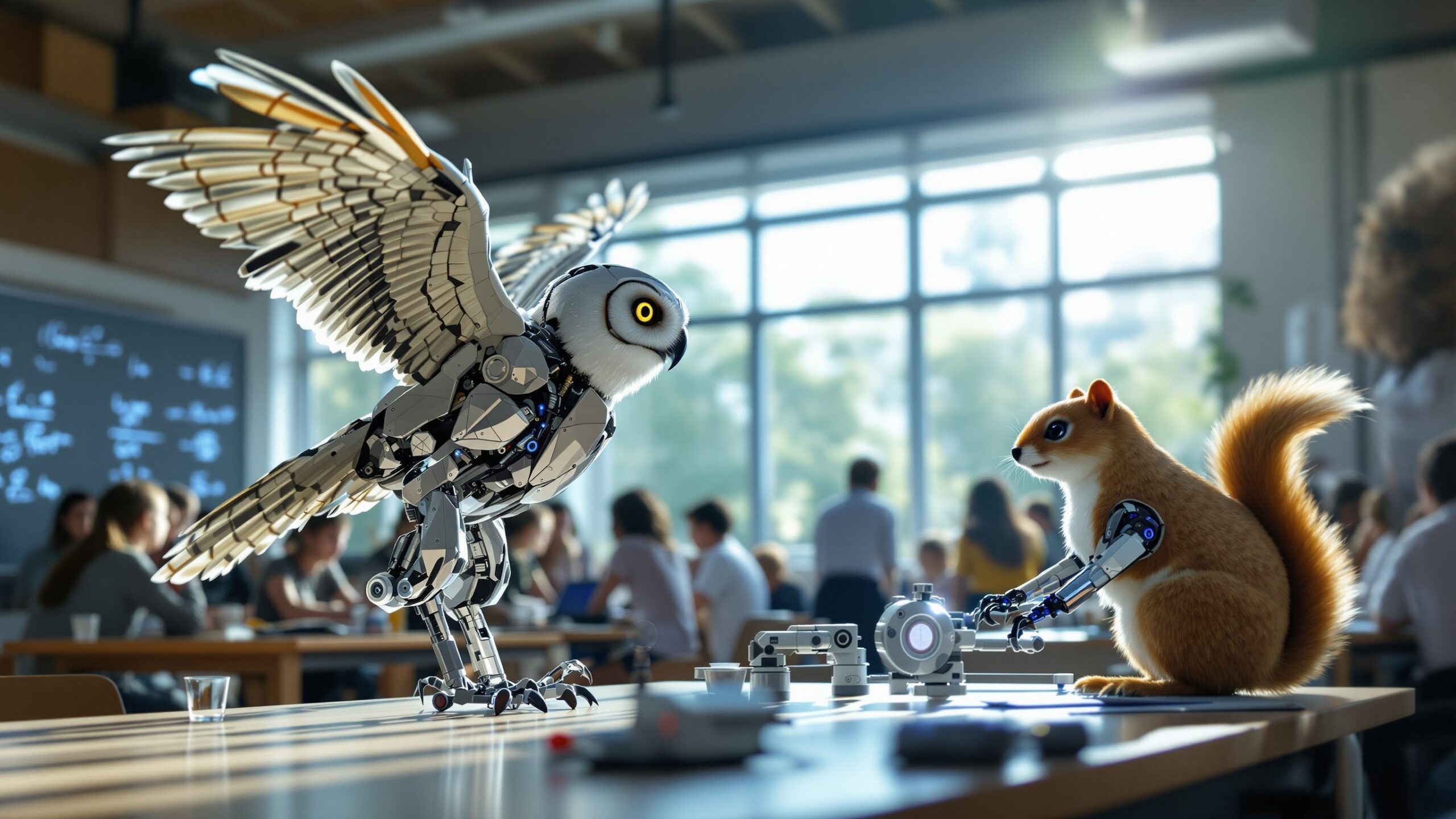
Step into the world of Education and STEM, where animatronics transforms curiosity into hands-on discovery and complex concepts into unforgettable experiences. From interactive classroom models to museum-grade robotic exhibits, this subcategory explores how animatronic technology is reshaping the way science, technology, engineering, and mathematics are taught and understood. Students don’t just learn—they engage with lifelike systems that demonstrate physics in motion, robotics in action, and programming in real time. Educators and innovators alike are leveraging animatronics to bridge the gap between theory and application, creating immersive learning environments that inspire critical thinking and creativity. Whether it’s a robotic arm illustrating mechanical engineering principles or a responsive character teaching coding logic, these dynamic tools bring STEM education to life in powerful ways. Dive into in-depth articles that uncover how animatronics is fueling the next generation of thinkers, builders, and problem-solvers, making Education and STEM more interactive, accessible, and exciting than ever before.
A: It scales from beginner kits for kids to advanced engineering projects.
A: No—many platforms start with visual programming before advancing.
A: Arduino and beginner robotics kits are widely used and affordable.
A: Costs vary, but many projects can be built with low-cost components.
A: Problem-solving, coding, engineering, and critical thinking.
A: Simple builds take hours; complex systems can take weeks.
A: No, but it enhances precision and customization.
A: Yes, teamwork is often encouraged in classrooms and labs.
A: Basic hand tools, a microcontroller, and a computer.
A: It integrates multiple disciplines into real-world innovation.