
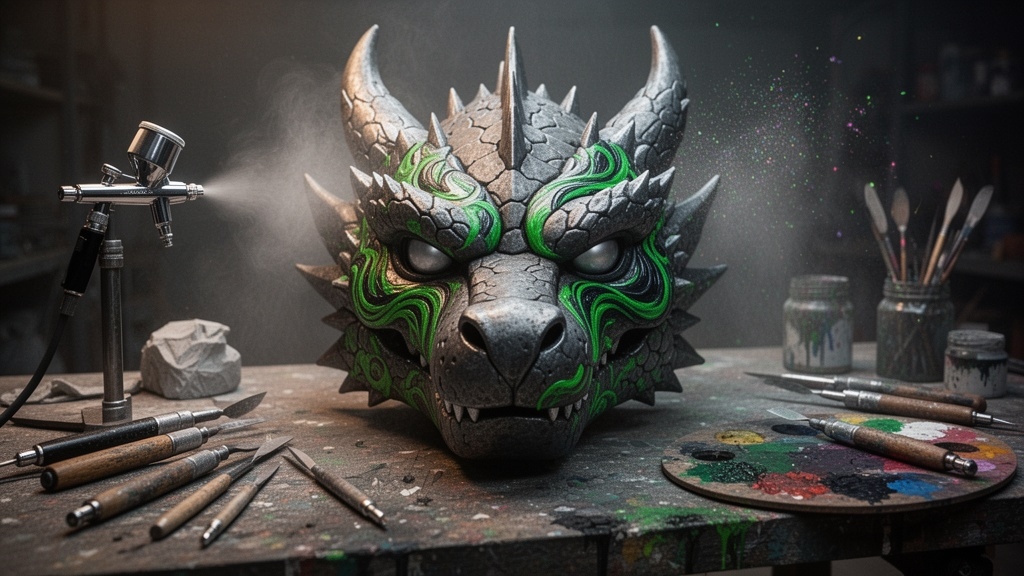
Precision doesn’t end when an animatronic is assembled—it truly comes alive during the finishing and paint phase, where raw builds transform into believable creations. This Finishing and Paint Systems hub explores the professional techniques, materials, and surface treatments that give animatronics realism, durability, and screen-ready impact. From industrial primers and flexible coatings to airbrushing, texturing, sealing, and weatherproof clear coats, every layer plays a functional and visual role. Discover how fabricators achieve lifelike skin tones, metallic patinas, creature textures, and themed finishes while protecting mechanisms from wear, moisture, and UV exposure. These in-depth guides cover prep methods, paint chemistry, tool selection, safety practices, and industry-grade workflows used in robotics, film props, theme attractions, and special effects fabrication. Whether refining a prototype or polishing a production figure, mastering finishing systems elevates builds from mechanical assemblies to convincing animated realities.
A: Too much material or spraying too close.
A: Dirty surfaces or incompatible coatings.
A: Adjust pressure, viscosity, or spray distance.
A: After curing when surface feels hard, not tacky.
A: Incorrect thinner ratio or humidity issues.
A: Yes if properly cleaned, sanded, and primed.
A: Perpendicular to surface for even coverage.
A: Trapped solvent or surface contamination.
A: After full cure—often 24–72 hours depending on system.
A: Seal tightly and keep in cool, dry conditions.