
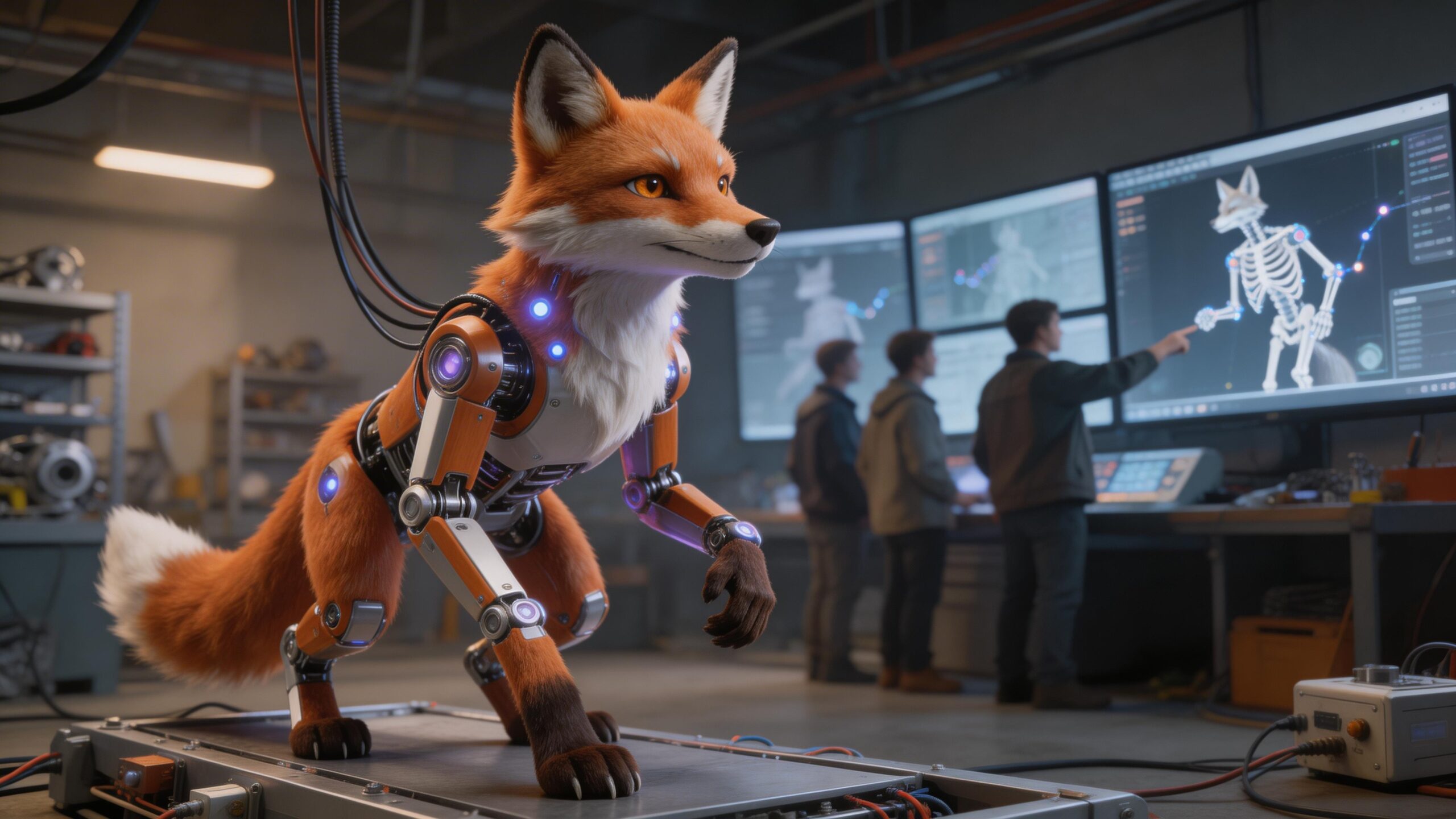
AI-Assisted Motion is transforming the world of animatronics by blending advanced artificial intelligence with precision motion control systems to create characters, creatures, and machines that move with stunning realism. Within the Control and Software category on Animatronics Street, this subcategory explores how AI algorithms, machine learning models, and intelligent motion planning are reshaping the way animatronic systems are designed, programmed, and operated. Instead of relying solely on pre-scripted movements, modern animatronics can analyze inputs, adapt behaviors, and generate fluid motion patterns in real time. From theme park figures that respond dynamically to audiences to robotic creatures that learn smoother movement through data-driven training, AI-assisted motion unlocks a new frontier of lifelike animation. Articles in this section dive into neural motion systems, predictive control models, real-time animation software, and AI tools that help engineers choreograph complex mechanical performances with unprecedented efficiency. Whether you are a robotics engineer, show control programmer, or animatronics enthusiast, AI-Assisted Motion reveals how intelligent software is turning mechanical structures into responsive, expressive, and adaptive animated systems.
A: AI allows motion to adapt dynamically instead of replaying fixed sequences.
A: Yes, but AI can refine or extend those keyframes automatically.
A: Many systems use small edge AI chips designed for robotics.
A: Yes, machine learning can generate movement variations quickly.
A: Safety limits and motion constraints are built into control algorithms.
A: Absolutely—AI excels at mimicking subtle human motion patterns.
A: Usually they integrate with existing show control frameworks.
A: Using motion capture data, simulation environments, and performance feedback.
A: Yes, vision and audio systems allow responsive behaviors.
A: More autonomous characters capable of reacting naturally in real time.