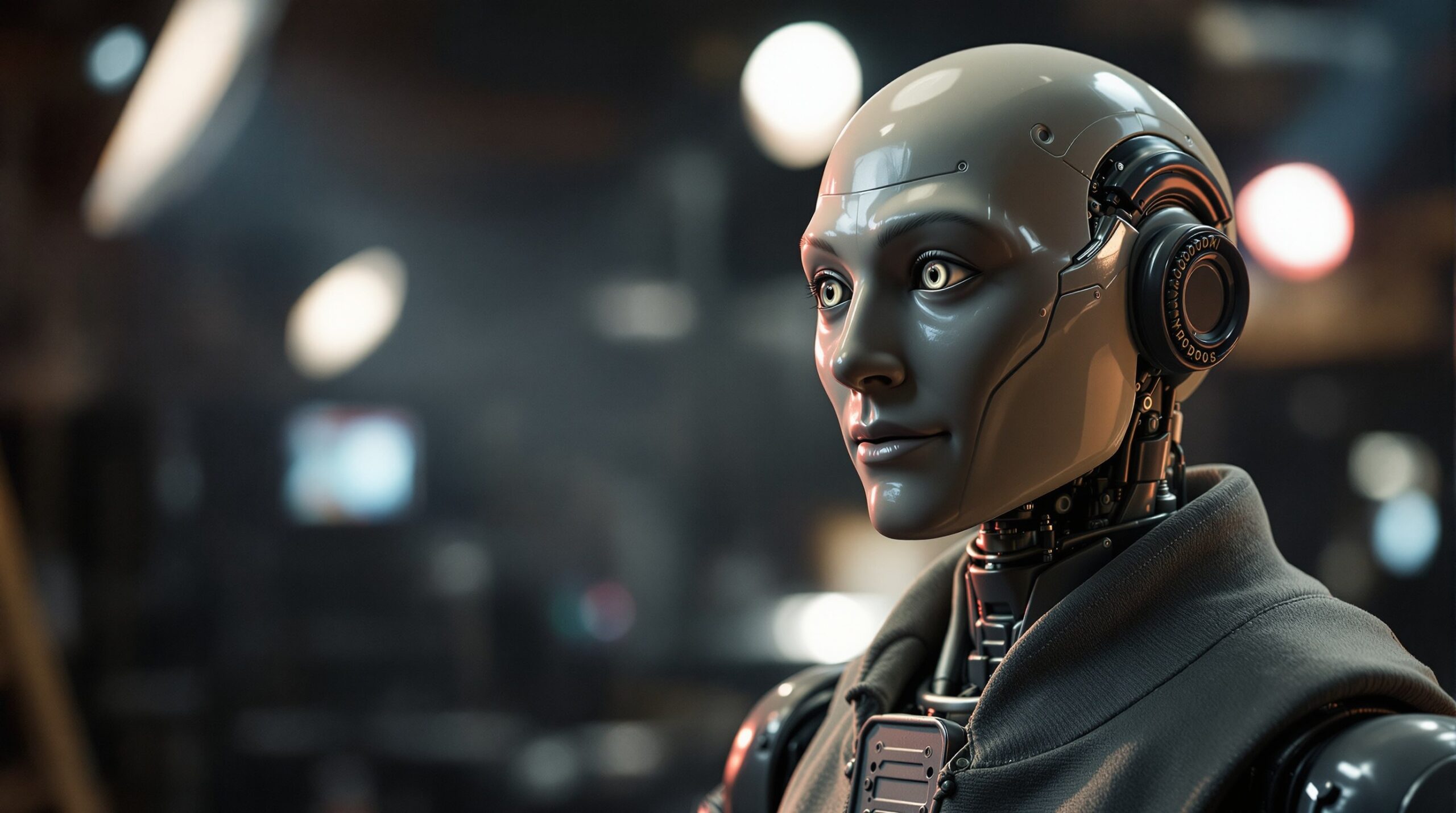
The Science of Making Animatronics Feel Alive
Animatronics occupy a unique space between engineering and illusion. When done well, they do not feel like machines performing motions; they feel like living entities sharing space with the viewer. Achieving that effect is not accidental. It is the result of decades of scientific study, artistic experimentation, mechanical refinement, and psychological insight. The science of making animatronics feel alive draws from biomechanics, neuroscience, robotics, materials science, acoustics, and human perception, all working together to blur the line between the artificial and the organic. At their core, lifelike animatronics succeed when technology disappears. The audience does not consciously analyze motors, joints, or control systems. Instead, they perceive intention, emotion, and presence. This article explores how that illusion is engineered, revealing the scientific principles and creative strategies that allow animatronic figures to breathe, react, and emotionally connect with humans.
A: Motion; the brain prioritizes movement cues.
A: Stillness breaks the illusion.
A: Slower than machines, faster than statues.
A: Yes, sound exposes mechanics.
A: Only to a limited degree.
A: Humans are naturally asymmetrical.
A: Timing errors and unnatural pauses.
A: Subconsciously, yes.
A: Believability matters more than realism.
A: Purposeful motion with emotional intent.
Understanding Human Perception and the Illusion of Life
The foundation of lifelike animatronics begins not with machinery, but with human perception. Humans are remarkably sensitive to motion, facial expression, eye behavior, and timing. From infancy, the brain is wired to detect biological movement and interpret subtle cues that indicate awareness or intent. Animatronic designers exploit this sensitivity by studying how humans perceive life rather than how machines function.
One of the most important concepts is biological motion. Humans can identify a walking person from just a few points of light representing joints. This means animatronics do not need perfect realism everywhere; they need accuracy in the right places. Small deviations in timing, rhythm, or posture can instantly break the illusion. Conversely, well-timed micro-movements can make even a stylized character feel alive.
Another critical factor is expectation. Viewers subconsciously compare what they see to what they know about living beings. If a movement feels too mechanical, too symmetrical, or too repetitive, the brain flags it as artificial. Successful animatronics introduce controlled irregularities that mimic natural behavior, making motion feel spontaneous rather than programmed.
Motion as the Language of Life
Motion is the primary way animatronics communicate life. Still figures can be impressive, but movement transforms them into perceived beings. The science behind lifelike motion is rooted in biomechanics, the study of how living organisms move.
Living creatures rarely move in straight lines or at constant speeds. Muscles accelerate and decelerate motion, joints have resistance, and bodies carry mass and inertia. Animatronic systems replicate these characteristics using motion profiles that include easing, overlap, and follow-through. Instead of snapping from one position to another, motions ramp up gradually, overshoot slightly, and settle into place, mimicking muscle-driven movement.
Secondary motion plays a major role as well. When a head turns, the neck lags slightly behind. When an arm moves, the fingers trail and adjust. These layered motions convince the viewer that the figure has internal structure and weight. Without them, even high-quality animatronics can feel stiff and robotic.
Timing is equally important. Animatronic movement must match the emotional intent of the scene. Slow, deliberate motions suggest calm or authority, while quick, sharp movements convey surprise or aggression. Engineers and animators collaborate closely to fine-tune timing so that motion aligns with character personality rather than purely mechanical efficiency.
Facial Expression and Emotional Recognition
The human face is one of the most complex and expressive biological systems. Replicating it convincingly is one of the greatest scientific challenges in animatronics. Humans can detect extremely subtle changes in facial muscles, and even minor inaccuracies can push a figure into the unsettling territory often referred to as the uncanny valley.
To overcome this, animatronic designers study facial anatomy in detail. The face is driven by dozens of muscles working in coordination, many of which influence multiple expressions. Modern animatronics replicate this complexity through layered mechanisms that allow independent movement of brows, eyelids, cheeks, lips, and jaw.
The science lies not only in replicating anatomy, but in understanding expression patterns. Emotions are rarely static. A smile forms gradually, often asymmetrically, and fades in stages. Eyes narrow slightly, cheeks lift, and micro-tensions appear around the mouth. Advanced animatronic faces are programmed to replicate these subtle transitions rather than switching between fixed expressions.
Eye behavior is especially critical. Humans instinctively seek eye contact to judge awareness and intent. Animatronic eyes that blink too regularly, stare too long, or move too precisely immediately feel artificial. Lifelike systems introduce irregular blink patterns, micro-saccades, and subtle focus shifts that simulate real visual attention.
Skin, Materials, and the Tactile Illusion
Motion alone cannot sell the illusion of life. The materials covering animatronics play an equally important role. Skin is not a uniform surface; it stretches, compresses, wrinkles, and reflects light in complex ways. Materials science has become a cornerstone of modern animatronics, enabling more organic movement and appearance.
Silicone elastomers are commonly used because they can mimic the elasticity and translucency of human or animal skin. The science behind these materials involves balancing softness with durability. Skin that is too soft may tear or deform permanently, while skin that is too stiff restricts motion and looks artificial.
Subsurface scattering is another key factor. Real skin allows light to penetrate slightly before reflecting back, creating a soft, lifelike glow. Advanced animatronic skins are formulated to replicate this effect, preventing the plastic or rubber appearance that plagued early designs.
Wrinkle behavior is also carefully engineered. When a face smiles or frowns, wrinkles form dynamically and disappear naturally. Strategic layering of materials and internal tension points allows wrinkles to appear only when appropriate, reinforcing the illusion of living tissue responding to movement.
Breathing, Stillness, and Micro-Movements
One of the most powerful tricks in making animatronics feel alive is the inclusion of motion even when the character appears to be at rest. Living beings are never completely still. They breathe, shift weight, blink, and make tiny adjustments that signal ongoing awareness.
Breathing motion is often subtle but essential. A gentle rise and fall of the chest or shoulders instantly suggests life, even if the figure is otherwise motionless. This movement must be slow, irregular, and context-appropriate. A character at rest breathes differently than one that is excited or stressed.
Micro-movements extend beyond breathing. Slight head tilts, small posture adjustments, and occasional shifts in gaze make animatronics feel responsive to their environment. These motions are often driven by low-level control loops that operate independently of main animation sequences, adding layers of realism without drawing attention to themselves.
Stillness itself is also engineered. Holding a pose too perfectly can feel unnatural. Designers introduce barely perceptible drift or tension release, mimicking the way muscles fatigue and adjust over time. This controlled imperfection reassures the viewer that the figure is alive rather than frozen.
Sound, Voice, and Synchronization
Sound plays a crucial role in animatronic realism, even when the focus is visual. Voice, breath sounds, mechanical noise control, and synchronization all contribute to the illusion of life.
Lip synchronization is a well-known challenge. Human speech involves complex coordination between jaw movement, lip shapes, tongue positioning, and facial expression. Advanced animatronics use phoneme-based control systems that map sounds to specific facial movements, allowing speech to feel natural rather than puppet-like.
Timing is critical. Even a slight delay between sound and motion can break immersion. Control systems are designed to synchronize audio and movement down to fractions of a second, ensuring that speech feels physically generated rather than externally triggered.
Mechanical noise is another consideration. Unwanted servo whine or actuator clicks remind the audience that machinery is present. Engineers invest significant effort in noise reduction through material isolation, precision gearing, and acoustic dampening, allowing the character’s voice and ambient sounds to dominate the experience.
Control Systems and the Brain Behind the Body
Behind every lifelike animatronic is a sophisticated control system acting as its nervous system. Early animatronics relied on simple mechanical loops and fixed sequences. Modern systems use programmable controllers, sensors, and sometimes artificial intelligence to create responsive behavior.
Motion controllers coordinate multiple actuators simultaneously, ensuring smooth transitions and realistic coordination. Feedback sensors monitor position, force, and speed, allowing the system to adjust movements in real time. This feedback loop prevents jerky motion and helps maintain consistent performance over long operating periods.
Reactive behaviors significantly enhance realism. Animatronics that respond to sound, proximity, or movement feel aware of their surroundings. Even simple reactions, such as turning toward a loud noise or shifting gaze when a person approaches, dramatically increase perceived intelligence and presence.
While full autonomy is not always necessary, controlled variability is essential. Slight differences in timing or motion between cycles prevent the character from feeling repetitive. This variability is often algorithmically generated, simulating spontaneity without sacrificing safety or reliability.
Psychology, Emotion, and Storytelling
The ultimate goal of lifelike animatronics is emotional connection. Science alone cannot achieve this without storytelling. Humans project emotion and intention onto figures that appear to react meaningfully within a narrative context.
Designers use psychological principles to guide character behavior. Clear motivation, consistent personality traits, and appropriate emotional responses help audiences accept the animatronic as a character rather than an object. A dragon that moves with deliberate power feels more alive than one that merely flaps its wings, because its motion communicates intent.
Emotion is conveyed through timing, posture, and expression rather than complexity. Simple movements performed with emotional clarity are often more effective than highly detailed but emotionally ambiguous actions. This understanding allows designers to prioritize expressiveness over technical excess.
The brain fills in gaps when presented with coherent cues. If an animatronic looks at a guest, pauses, and then reacts, the audience assumes awareness and thought, even if the underlying system is relatively simple. This psychological shortcut is one of the most powerful tools in animatronic design.
Avoiding the Uncanny Valley
One of the greatest risks in lifelike animatronics is the uncanny valley, the phenomenon where near-human realism creates discomfort rather than connection. Science helps designers navigate this challenge by understanding where and why the illusion breaks down.
The uncanny valley often emerges from mismatched realism. A face may look highly realistic, but its movement feels mechanical, or vice versa. Consistency across visual appearance, motion quality, and behavior is critical. Stylization is sometimes deliberately chosen to avoid unrealistic expectations.
Subtle exaggeration can also help. Slightly larger eye movements, more pronounced expressions, or simplified facial features can make characters feel expressive without triggering discomfort. This balance between realism and artistry is informed by both empirical observation and audience testing.
The Future of Lifelike Animatronics
The science of making animatronics feel alive continues to evolve. Advances in soft robotics, machine learning, and sensor technology promise even greater realism and responsiveness. Future animatronics may adapt their behavior based on audience interaction, learn from repeated performances, and display increasingly nuanced emotional expression.
Integration with artificial intelligence opens new possibilities for dynamic storytelling. Characters may hold conversations, respond uniquely to individual guests, or adjust their performance based on context. These developments build upon the same foundational principles: understanding human perception, replicating biological motion, and prioritizing emotional authenticity.
Despite technological progress, the core science remains unchanged. Animatronics feel alive not because they perfectly replicate life, but because they align with how humans perceive and interpret living beings. When engineering, artistry, and psychology work in harmony, the result is a machine that disappears, leaving behind a character that feels undeniably real.
Conclusion: Where Science Becomes Magic
Making animatronics feel alive is a multidisciplinary science disguised as magic. It combines precise engineering with deep insight into human behavior, emotion, and perception. Every blink, breath, and subtle movement is the result of deliberate design choices informed by biology, physics, and psychology.
When done well, animatronics transcend their mechanical origins. They engage, surprise, and emotionally resonate with audiences, creating moments of wonder that linger long after the machinery stops moving. In that space between science and storytelling, animatronics achieve their ultimate goal: not just to move, but to live in the imagination of those who encounter them.