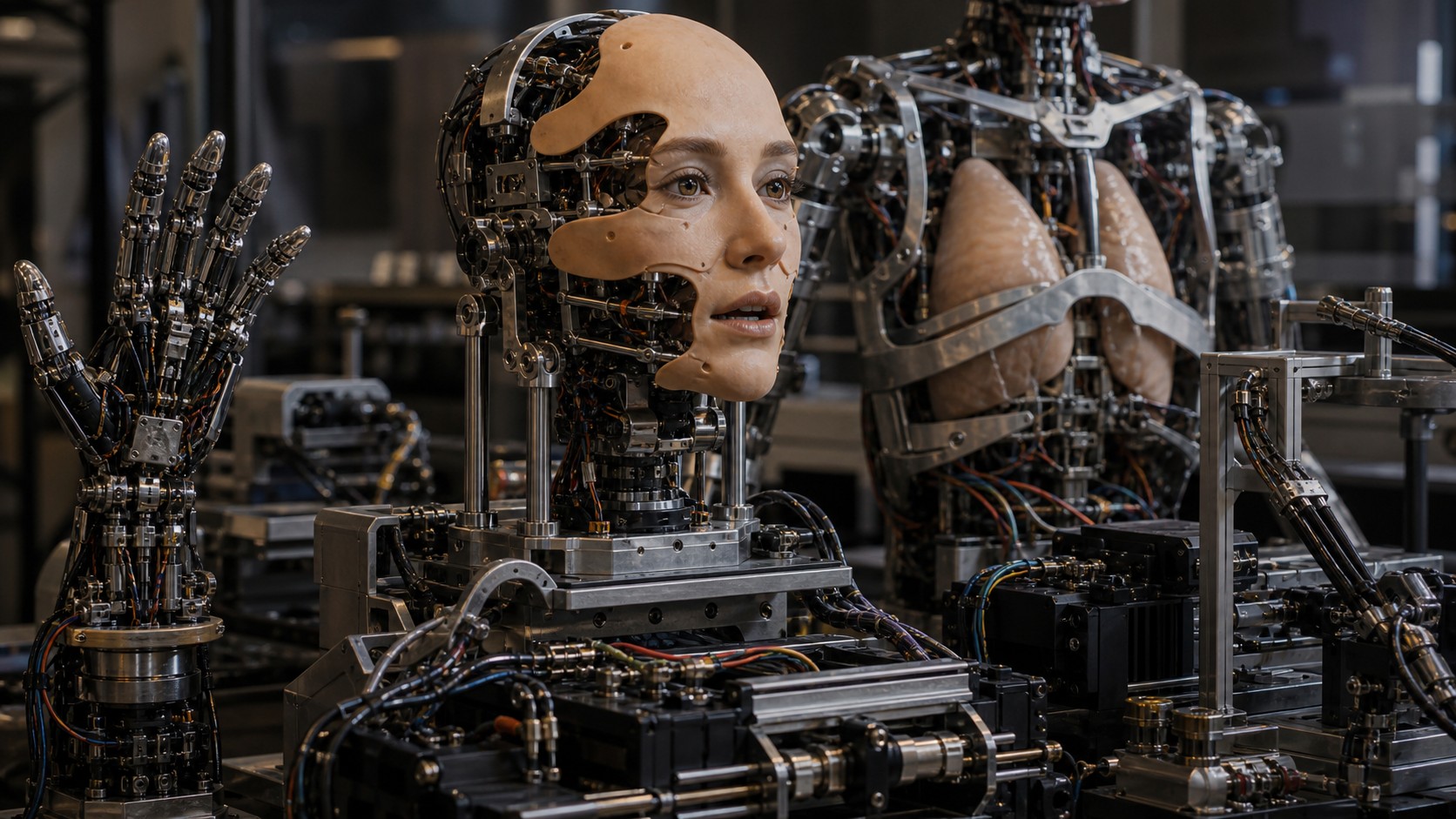
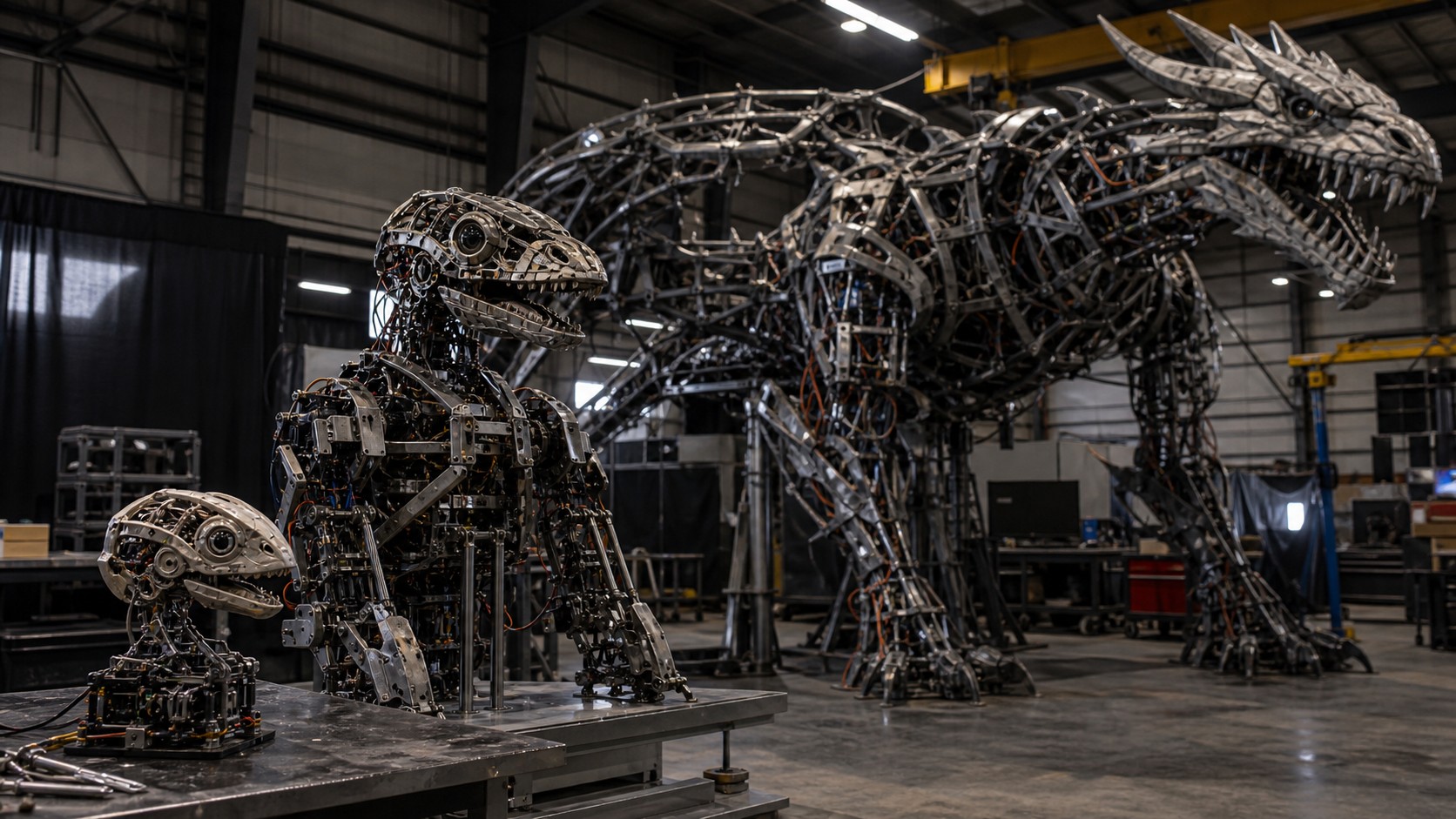
How to Design Large-Scale Animatronics Without Losing Precision is really a guide to making hidden engineering behave like visible life. The parts may be metal, silicone, code, wire, and carefully chosen fasteners, but the goal is not to show off the parts. The goal is to make a character move with enough purpose, weight, and timing that a viewer stops thinking about machinery and starts reading intention.
A: Use rigid frames, high-resolution encoders, and closed-loop control systems.
A: Industrial-grade servos with torque reserves and thermal protection.
A: Choose harmonic drives, precision gearboxes, and proper tensioning.
A: Hydraulics offer force; electric servos offer precision—application dictates choice.
A: After installation and periodically based on usage cycles.
A: Poor PID tuning, loose components, or electrical interference.
A: Yes, if duty cycles and cooling systems are properly engineered.
A: Install limit switches, E-stops, and redundant monitoring sensors.
A: Ignoring structural flex until after full assembly.
A: Early testing exposes scaling issues before major fabrication costs.
Precision Starts in the Frame
Precision Starts in the Frame matters because how to design large-scale animatronics without losing precision is judged by what an audience can feel before it understands the mechanism. For this precision at large scale approach, the designer starts with the motion the audience should believe in, then checks whether the frame, actuator, control signal, and outer material can all support that promise. A choice that looks clever on the bench can become difficult once heat, service access, skin resistance, calibration, and repeated cycles enter the build. When the answer is yes, the engineering starts to disappear and the performance becomes easier to trust.
In a practical shop, precision starts in the frame is less a theory than a decision that shows up in brackets, wiring, timing, and surface behavior. A choice that looks clever on the bench can become difficult once heat, service access, skin resistance, calibration, and repeated cycles enter the build. The best animatronic work usually comes from small tests that reveal where the movement feels heavy, where it feels nervous, and where the mechanism is asking the material to do too much. When the answer is no, the fix may be mechanical, electronic, artistic, or simply a calmer timing curve.
Large Motion Magnifies Small Error
In a practical shop, large motion magnifies small error is less a theory than a decision that shows up in brackets, wiring, timing, and surface behavior. The best animatronic work usually comes from small tests that reveal where the movement feels heavy, where it feels nervous, and where the mechanism is asking the material to do too much. That is why professional builders keep returning to the same question: does this choice make the character more convincing, more reliable, and easier to maintain? When the answer is no, the fix may be mechanical, electronic, artistic, or simply a calmer timing curve.
Builders learn quickly that large motion magnifies small error cannot be separated from the character’s job, the viewing distance, and the number of times the figure must perform. That is why professional builders keep returning to the same question: does this choice make the character more convincing, more reliable, and easier to maintain? For this precision at large scale approach, the designer starts with the motion the audience should believe in, then checks whether the frame, actuator, control signal, and outer material can all support that promise. Seen this way, the component is not just hardware; it is part of the audience’s emotional read of the figure.
The useful way to think about large motion magnifies small error is to connect it to the visible illusion rather than treating it as an isolated part. For this precision at large scale approach, the designer starts with the motion the audience should believe in, then checks whether the frame, actuator, control signal, and outer material can all support that promise. A choice that looks clever on the bench can become difficult once heat, service access, skin resistance, calibration, and repeated cycles enter the build. This is the difference between a moving assembly and an animatronic presence that feels intentional.
Actuator Choice Becomes Structural
Builders learn quickly that actuator choice becomes structural cannot be separated from the character’s job, the viewing distance, and the number of times the figure must perform. For this precision at large scale approach, the designer starts with the motion the audience should believe in, then checks whether the frame, actuator, control signal, and outer material can all support that promise. A choice that looks clever on the bench can become difficult once heat, service access, skin resistance, calibration, and repeated cycles enter the build. Seen this way, the component is not just hardware; it is part of the audience’s emotional read of the figure.
The useful way to think about actuator choice becomes structural is to connect it to the visible illusion rather than treating it as an isolated part. A choice that looks clever on the bench can become difficult once heat, service access, skin resistance, calibration, and repeated cycles enter the build. The best animatronic work usually comes from small tests that reveal where the movement feels heavy, where it feels nervous, and where the mechanism is asking the material to do too much. This is the difference between a moving assembly and an animatronic presence that feels intentional.
Sensors Help Hold the Pose
The useful way to think about sensors help hold the pose is to connect it to the visible illusion rather than treating it as an isolated part. The best animatronic work usually comes from small tests that reveal where the movement feels heavy, where it feels nervous, and where the mechanism is asking the material to do too much. That is why professional builders keep returning to the same question: does this choice make the character more convincing, more reliable, and easier to maintain? This is the difference between a moving assembly and an animatronic presence that feels intentional.
Sensors Help Hold the Pose matters because how to design large-scale animatronics without losing precision is judged by what an audience can feel before it understands the mechanism. That is why professional builders keep returning to the same question: does this choice make the character more convincing, more reliable, and easier to maintain? For this precision at large scale approach, the designer starts with the motion the audience should believe in, then checks whether the frame, actuator, control signal, and outer material can all support that promise. When the answer is yes, the engineering starts to disappear and the performance becomes easier to trust.
Cable Runs Need Architecture
Cable Runs Need Architecture matters because how to design large-scale animatronics without losing precision is judged by what an audience can feel before it understands the mechanism. For this precision at large scale approach, the designer starts with the motion the audience should believe in, then checks whether the frame, actuator, control signal, and outer material can all support that promise. A choice that looks clever on the bench can become difficult once heat, service access, skin resistance, calibration, and repeated cycles enter the build. When the answer is yes, the engineering starts to disappear and the performance becomes easier to trust.
In a practical shop, cable runs need architecture is less a theory than a decision that shows up in brackets, wiring, timing, and surface behavior. A choice that looks clever on the bench can become difficult once heat, service access, skin resistance, calibration, and repeated cycles enter the build. The best animatronic work usually comes from small tests that reveal where the movement feels heavy, where it feels nervous, and where the mechanism is asking the material to do too much. When the answer is no, the fix may be mechanical, electronic, artistic, or simply a calmer timing curve.
Builders learn quickly that cable runs need architecture cannot be separated from the character’s job, the viewing distance, and the number of times the figure must perform. The best animatronic work usually comes from small tests that reveal where the movement feels heavy, where it feels nervous, and where the mechanism is asking the material to do too much. That is why professional builders keep returning to the same question: does this choice make the character more convincing, more reliable, and easier to maintain? Seen this way, the component is not just hardware; it is part of the audience’s emotional read of the figure.
Thermal and Load Changes Matter
In a practical shop, thermal and load changes matter is less a theory than a decision that shows up in brackets, wiring, timing, and surface behavior. The best animatronic work usually comes from small tests that reveal where the movement feels heavy, where it feels nervous, and where the mechanism is asking the material to do too much. That is why professional builders keep returning to the same question: does this choice make the character more convincing, more reliable, and easier to maintain? When the answer is no, the fix may be mechanical, electronic, artistic, or simply a calmer timing curve.
Builders learn quickly that thermal and load changes matter cannot be separated from the character’s job, the viewing distance, and the number of times the figure must perform. That is why professional builders keep returning to the same question: does this choice make the character more convincing, more reliable, and easier to maintain? For this precision at large scale approach, the designer starts with the motion the audience should believe in, then checks whether the frame, actuator, control signal, and outer material can all support that promise. Seen this way, the component is not just hardware; it is part of the audience’s emotional read of the figure.
Commissioning Is Part of Design
Builders learn quickly that commissioning is part of design cannot be separated from the character’s job, the viewing distance, and the number of times the figure must perform. For this precision at large scale approach, the designer starts with the motion the audience should believe in, then checks whether the frame, actuator, control signal, and outer material can all support that promise. A choice that looks clever on the bench can become difficult once heat, service access, skin resistance, calibration, and repeated cycles enter the build. Seen this way, the component is not just hardware; it is part of the audience’s emotional read of the figure.
The useful way to think about commissioning is part of design is to connect it to the visible illusion rather than treating it as an isolated part. A choice that looks clever on the bench can become difficult once heat, service access, skin resistance, calibration, and repeated cycles enter the build. The best animatronic work usually comes from small tests that reveal where the movement feels heavy, where it feels nervous, and where the mechanism is asking the material to do too much. This is the difference between a moving assembly and an animatronic presence that feels intentional.
Big Figures Still Need Delicate Timing
The useful way to think about big figures still need delicate timing is to connect it to the visible illusion rather than treating it as an isolated part. The best animatronic work usually comes from small tests that reveal where the movement feels heavy, where it feels nervous, and where the mechanism is asking the material to do too much. That is why professional builders keep returning to the same question: does this choice make the character more convincing, more reliable, and easier to maintain? This is the difference between a moving assembly and an animatronic presence that feels intentional.
Big Figures Still Need Delicate Timing matters because how to design large-scale animatronics without losing precision is judged by what an audience can feel before it understands the mechanism. That is why professional builders keep returning to the same question: does this choice make the character more convincing, more reliable, and easier to maintain? For this precision at large scale approach, the designer starts with the motion the audience should believe in, then checks whether the frame, actuator, control signal, and outer material can all support that promise. When the answer is yes, the engineering starts to disappear and the performance becomes easier to trust.
The Practical Takeaway
The strongest lesson in how to design large-scale animatronics without losing precision is that animatronics rewards integrated thinking. A part is never only a part after it is installed inside a figure. It affects timing, service, sound, heat, skin behavior, safety, and the way the audience interprets the character. Builders who keep those relationships visible make better decisions and spend less time fighting surprises late in the project.
That is also what makes the field so satisfying. Animatronics sits between sculpture, machine design, theatrical timing, controls, and maintenance reality. When those disciplines support one another, even a simple mechanism can feel expressive. When they compete, even expensive hardware can look lifeless. The craft is learning how to make every layer serve the performance.