A Mechanical Dream Before Its Time
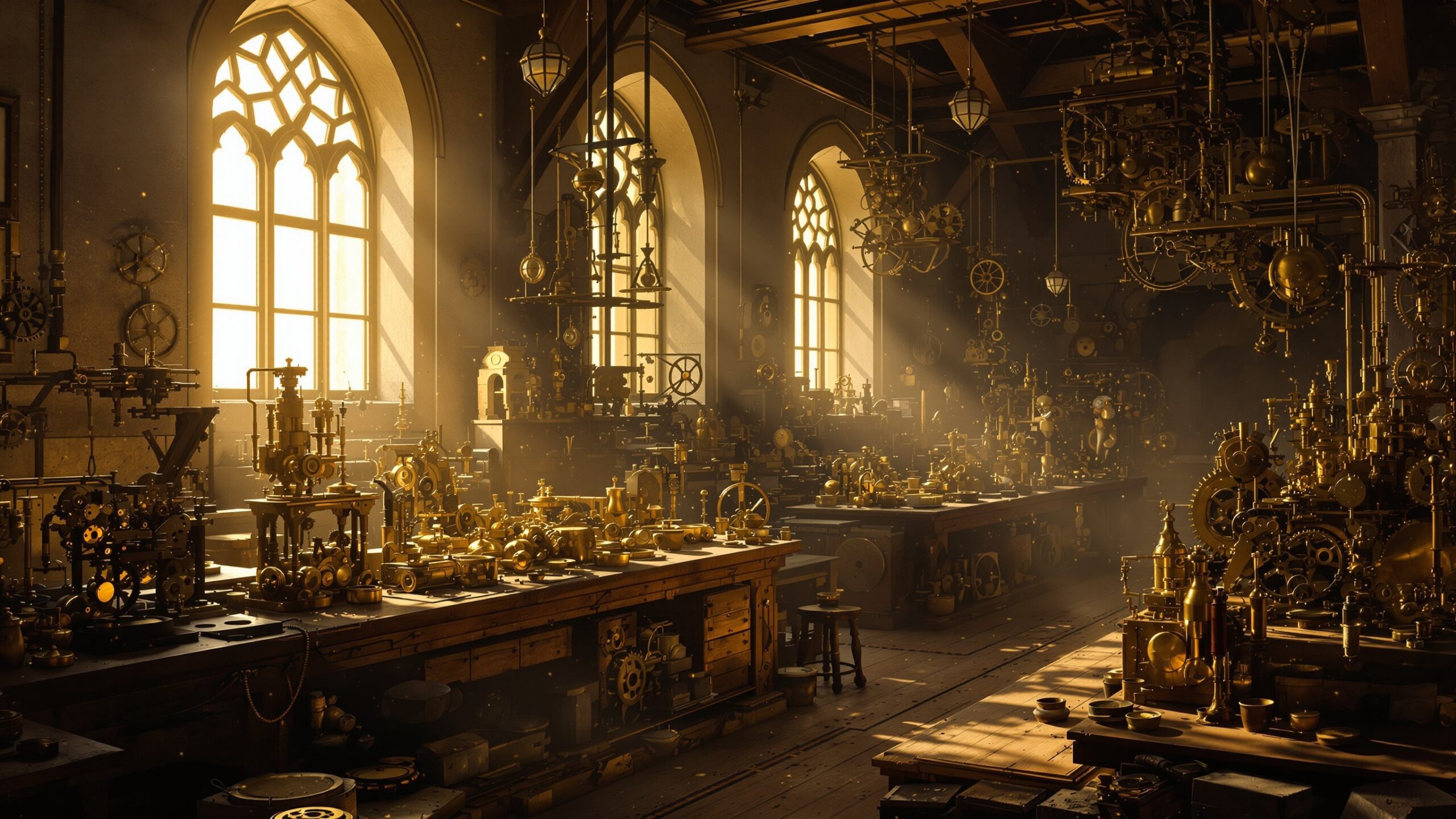
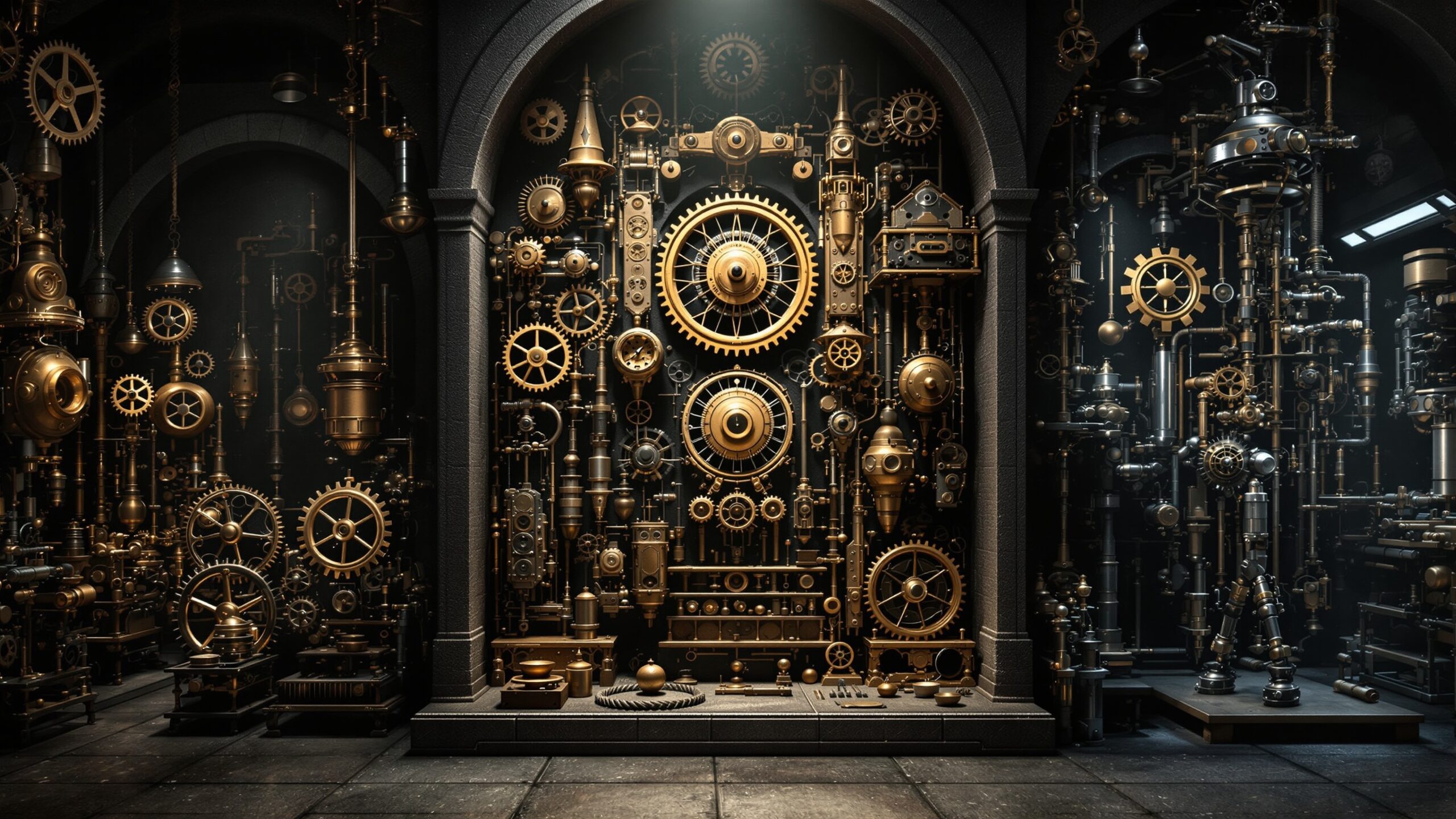
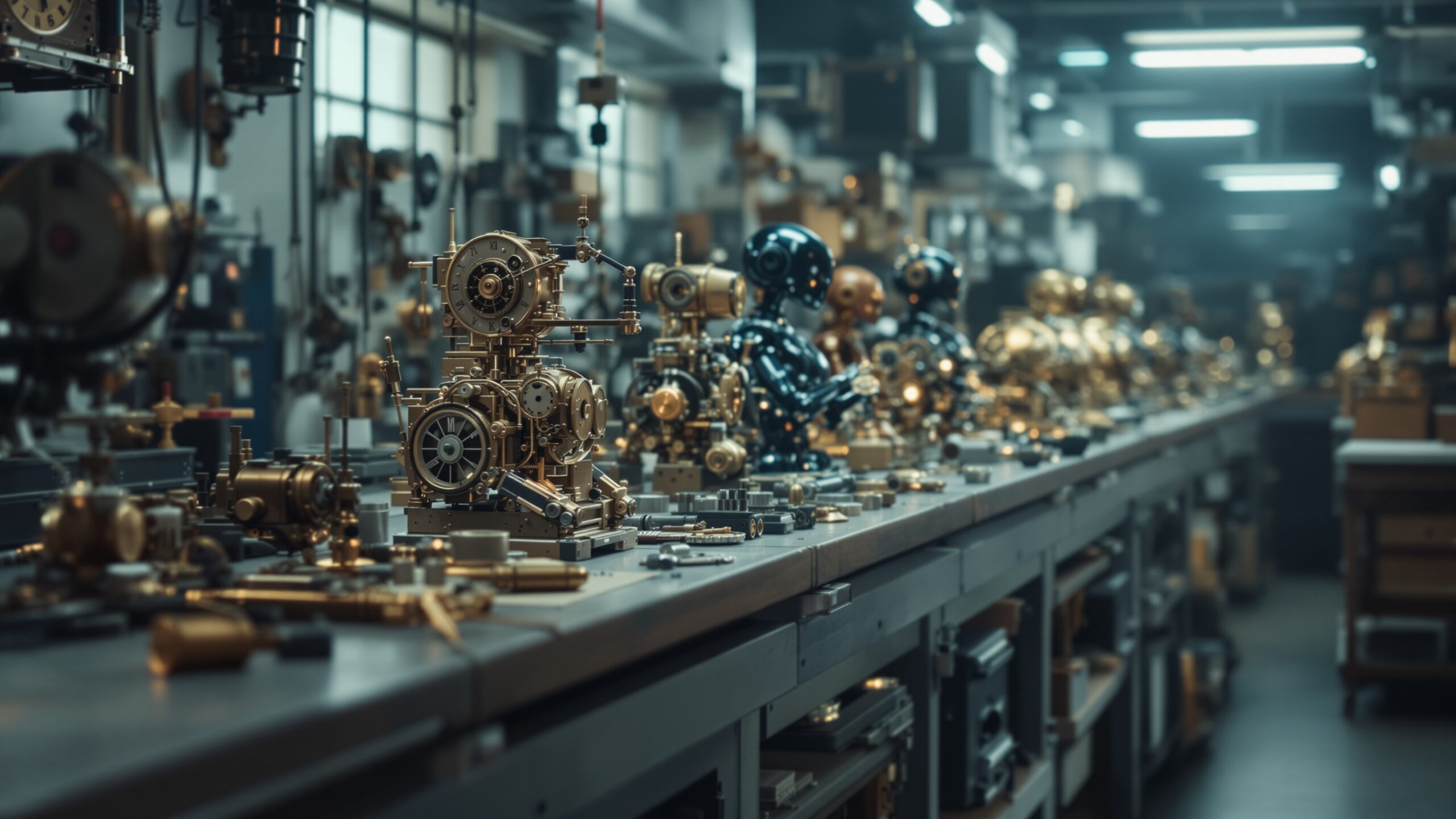
Long before the word “animatronics” entered the modern lexicon, humanity was already captivated by the idea of breathing life into the inanimate. The desire to replicate motion, mimic behavior, and simulate living systems has deep roots in human history, stretching back thousands of years. What we now recognize as animatronics—the fusion of mechanics, electronics, and control systems to create lifelike movement—did not emerge suddenly. Instead, it evolved from a lineage of ingenious mechanical creations known as automata. These early machines were not merely curiosities or novelties. They represented groundbreaking advances in engineering, physics, and creative design. From ancient temples to royal courts, automata captured the imagination of civilizations and laid the conceptual and technical groundwork for modern robotics and animatronics. Understanding their origins reveals not only the evolution of engineering but also the enduring human fascination with artificial life.
A: It is a self-moving mechanical figure designed to imitate living motion or perform a timed action.
A: Not exactly; automata were mechanical ancestors, while modern animatronics add electronics, sensors, motors, and digital control.
A: Clockmaking advanced precision gearing, timing, and motion control, which directly supported automata design.
A: They used wound springs, falling weights, water pressure, air systems, gears, and cams.
A: Smooth timing, believable gestures, hidden mechanics, and detailed craftsmanship all strengthened the illusion.
A: No; they also demonstrated engineering skill, scientific ideas, prestige, and advances in precision manufacturing.
A: The cam is one of the most important because it controls repeatable motion patterns.
A: Yes; they helped shape ideas used in robotics, control systems, manufacturing, and mechanical design.
A: They reveal how art, science, mechanics, and human curiosity came together long before modern robotics.
A: They show that the dream of building expressive moving machines has deep historical roots that still inform animatronics now.
Ancient Beginnings: The First Automata
The earliest known automata date back to ancient civilizations, where engineers and inventors experimented with water, air pressure, and simple mechanics to create moving devices. In ancient Greece, one of the most influential figures in this domain was Hero of Alexandria, a mathematician and engineer who lived during the first century AD. Hero’s works documented numerous mechanical devices, including automated theaters, self-opening temple doors, and even primitive programmable machines.
Hero’s automata relied heavily on pneumatics and hydraulics. By using pressurized air or flowing water, he could trigger sequences of motion that appeared almost magical to observers. One of his most famous inventions involved temple doors that would open automatically when a fire was lit on an altar. The heat would increase air pressure, displacing water and activating a system of pulleys and weights. This seamless interaction between natural forces and mechanical systems marked one of the earliest integrations of control logic in engineering.
Simultaneously, in ancient China, engineers were developing their own forms of automata. Historical records describe mechanical birds that could flap their wings and artificial figures that could perform simple tasks. These devices were often powered by waterwheels or clockwork mechanisms, demonstrating parallel innovation across cultures.
The Islamic Golden Age: Engineering as an Art Form
Between the 8th and 13th centuries, the Islamic Golden Age became a pivotal period for technological advancement, particularly in the development of automata. Scholars and engineers expanded upon earlier Greek and Roman knowledge, refining mechanical systems and introducing new levels of complexity.
Among the most notable contributors was Al-Jazari, a 12th-century engineer whose book, The Book of Knowledge of Ingenious Mechanical Devices, remains a cornerstone of mechanical engineering history. Al-Jazari designed intricate water clocks, automated musical bands, and programmable humanoid servants. His inventions incorporated cams, gears, and crankshafts—components that are still fundamental in modern machinery.
One of Al-Jazari’s most remarkable creations was a boat carrying four mechanical musicians that could perform on water. The rhythm and sequence of the music could be altered by adjusting pegs on a rotating drum, effectively making it an early form of programmable automation. This concept of reconfigurable behavior is strikingly similar to the software-driven control systems used in modern animatronics.
What distinguished this era was not just technical sophistication, but the seamless integration of aesthetics and engineering. Automata were designed to entertain, impress, and inspire, blending artistic expression with mechanical precision. This duality continues to define animatronics today.
Renaissance Innovation: The Rise of Mechanical Mastery
The Renaissance marked a resurgence of scientific inquiry and artistic exploration in Europe, and automata became a focal point for both. Engineers and artists alike sought to push the boundaries of what machines could achieve, often blurring the line between science and spectacle.
Leonardo da Vinci stands as one of the most iconic figures of this period. While many of his designs remained conceptual, his notebooks reveal detailed plans for mechanical knights, automated lions, and self-propelled carts. His mechanical knight, designed in the late 15th century, could reportedly sit, stand, move its arms, and even open its jaw. These movements were driven by a complex system of pulleys and cables, demonstrating an advanced understanding of kinematics and biomechanics.
Renaissance automata were often commissioned by royalty and displayed in courts as symbols of power and intellectual achievement. Mechanical clocks featuring moving figures, elaborate fountains with animated sculptures, and lifelike dolls became increasingly sophisticated. The development of clockwork mechanisms during this period was particularly significant, as it introduced precise timing and repeatable motion—key elements in the evolution of animatronics.
The Enlightenment Era: Precision and Complexity
By the 17th and 18th centuries, automata had reached unprecedented levels of precision and realism. Advances in metallurgy, machining, and mathematical modeling enabled engineers to create machines that could mimic human and animal behavior with astonishing accuracy.
One of the most famous automaton creators of this era was Jacques de Vaucanson, a French inventor known for his lifelike mechanical creations. His “Digesting Duck,” unveiled in 1739, could flap its wings, eat grain, and simulate digestion. While some aspects of its functionality were later revealed to be more illusion than reality, the engineering behind it was undeniably sophisticated.
Another prominent figure was Pierre Jaquet-Droz, a Swiss watchmaker who created a series of automata capable of writing, drawing, and playing music. His “Writer” automaton, for example, could produce customized text using a programmable system of cams. This level of control and adaptability foreshadowed modern programmable machines and even early computing concepts.
These creations were not just technical marvels; they sparked philosophical debates about the nature of life, consciousness, and the role of machines in society. As automata became more lifelike, they challenged perceptions of what separated humans from machines—a question that remains relevant in today’s era of advanced robotics.
Industrial Revolution: Mechanization and Mass Influence
The Industrial Revolution transformed the landscape of engineering, shifting the focus from handcrafted automata to large-scale mechanization. While the era is often associated with factories and steam engines, it also played a critical role in advancing the technologies that would eventually lead to animatronics.
Mass production techniques, improved materials, and the standardization of mechanical components made complex machines more accessible and reliable. Gear systems, linkages, and rotary motion became fundamental elements in industrial machinery, many of which were adapted from earlier automata designs.
During this period, automata began to transition from exclusive curiosities to educational tools and entertainment devices for a broader audience. Mechanical toys, music boxes, and fairground attractions introduced the general public to automated motion. These devices, though simpler than their predecessors, helped popularize the concept of machines that could mimic life.
The Industrial Revolution also introduced new power sources, such as steam and later electricity, which expanded the possibilities for automation. These developments laid the groundwork for the integration of electrical systems into mechanical devices—a key step toward modern animatronics.
The Birth of Modern Animatronics
The 20th century marked the transition from traditional automata to what we now recognize as animatronics. This shift was driven by the convergence of multiple disciplines, including electrical engineering, control systems, and materials science.
One of the most significant milestones in this evolution was the work of Walt Disney Imagineering in the mid-20th century. Disney’s team developed advanced animatronic figures for theme park attractions, combining mechanical frameworks with electronic control systems to create lifelike movement and synchronized audio. Attractions such as “Enchanted Tiki Room” and “Pirates of the Caribbean” showcased the potential of animatronics as a storytelling medium.
These early animatronic systems utilized pneumatic and hydraulic actuators, along with cam-driven mechanisms, to achieve smooth and repeatable motion. The introduction of digital control systems later allowed for greater precision, flexibility, and complexity, enabling animatronics to respond dynamically to their environment.
The influence of earlier automata is evident in these systems. Concepts such as programmable motion, mechanical articulation, and the integration of multiple subsystems can all be traced back to ancient and medieval innovations. Modern animatronics did not replace automata; they evolved from them.
Engineering Principles That Endured
The legacy of early automata is deeply embedded in the core principles of animatronics. At its foundation, animatronics relies on the coordination of motion, control, and feedback—concepts that were first explored by ancient engineers.
Mechanical linkages, for example, remain a fundamental component in translating rotational motion into linear or complex movements. Gear trains, cams, and levers are still used to control motion profiles and timing. Even the idea of modular design, seen in the interchangeable components of historical automata, continues to influence modern engineering practices.
Control systems have also evolved significantly, but their origins can be traced back to the simple cause-and-effect mechanisms of early automata. Whether it was a water-driven sequence in a Greek temple or a cam-driven program in a Renaissance automaton, the underlying concept of predefined behavior remains central to animatronics.
Materials and fabrication techniques have advanced dramatically, allowing for more durable, lightweight, and realistic designs. However, the fundamental challenge—creating convincing motion that mimics life—remains unchanged.
Cultural Impact and Lasting Influence
Beyond their technical contributions, automata have had a profound cultural impact. They have inspired literature, art, and philosophy, shaping how societies perceive technology and artificial life. From myths of mechanical beings to modern science fiction, the idea of lifelike machines has captured the human imagination for centuries.
In many ways, automata served as a bridge between art and engineering, demonstrating that technology could be both functional and expressive. This interdisciplinary approach continues to define animatronics, particularly in industries such as entertainment, education, and themed experiences.
The influence of automata can also be seen in the development of robotics and artificial intelligence. While these fields have diverged in complexity and capability, they share a common origin in the pursuit of replicating life through technology.
From Ancient Innovation to Future Possibilities
The journey from ancient automata to modern animatronics is a testament to human ingenuity and curiosity. Each era contributed new ideas, techniques, and technologies, building upon the foundations laid by earlier innovators. What began as simple mechanical experiments evolved into complex systems capable of astonishing realism and interactivity.
Today, animatronics continues to push the boundaries of what is possible. Advances in sensors, artificial intelligence, and materials science are enabling machines that can learn, adapt, and interact in ways that early engineers could scarcely imagine. Yet, despite these advancements, the core principles remain rooted in the legacy of automata.
Understanding this history is more than an academic exercise; it provides valuable insights into the evolution of engineering and the enduring quest to bring machines to life. The origins of animatronics are not just a story of technology, but a reflection of humanity’s desire to create, innovate, and explore the boundaries of possibility. As we look to the future, the lessons of the past continue to guide us. The early automata that once amazed ancient audiences have left an indelible mark on engineering, shaping a field that continues to evolve and inspire.