The Psychology of Sound in Practical Effects and Immersive Experiences: Practical Builder's Guide
The Psychology of Sound in Practical Effects and Immersive Experiences is about making the visible character and the hidden environmental effect support each other. The useful starting point is not a part number or a trick, but the job the finished piece has to do for the audience. That job determines which materials belong in the build, how much adjustment the mechanism needs, where access panels should go, and how the final surface should be tested before the post is called finished.
A: Confirm the visible goal, the load or material behavior, and the service access before final finish.
A: It turns a broad build topic into specific checks a builder can test, adjust, and maintain.
A: The weak spot is usually an untested transition between the mechanism, material, finish, and access plan.
A: Use a small sample or bench rig, then repeat the test under the lighting, load, and timing expected in use.
A: Simplify when added detail makes the motion, repair path, safety, or visible read less reliable.
A: Record materials, settings, attachment methods, test results, and photos of hidden construction.
A: Close views need better finish and seams, while distant views need stronger silhouette, timing, and contrast.
A: Check movement, fit, finish, fasteners, wiring or hoses, safety limits, and access panels.
A: Yes, if the structure, access, and control plan leave room for replacement parts or added motion.
A: A professional result is readable, durable, serviceable, and restrained enough that the method stays hidden.
Begin With the Viewer Path
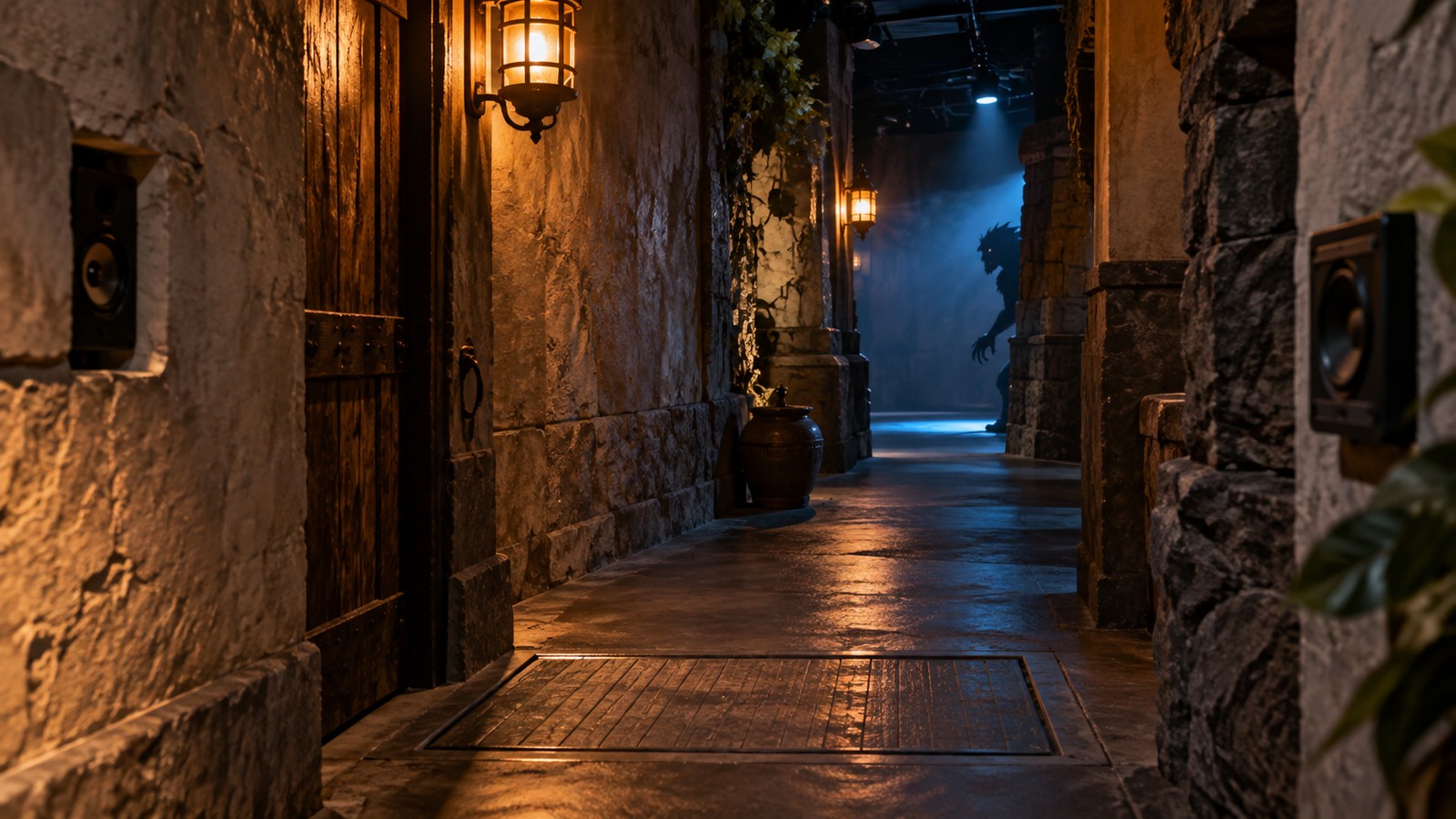
Begin With the Viewer Path is a practical decision for the psychology of sound in practical effects and immersive experiences, because the finished piece has to work as a complete build rather than a collection of impressive parts. The builder is balancing light, shadow, sound, scenic texture, hidden hardware, atmosphere, sightlines, and timing cues. When those choices support the same visible goal, the result feels cleaner, safer, and easier to understand from the audience side.
A good shop process turns that decision into something testable. Instead of waiting until final assembly, the builder can use viewer-path checks, lighting passes, sound timing reviews, sightline tests, and service access checks to reveal weak spots early. That kind of testing is not busywork; it shows whether the design will survive motion, handling, installation, and the small adjustments that always happen near the end of a build.
The Environment Should Share the Effect
The Environment Should Share the Effect is a practical decision for the psychology of sound in practical effects and immersive experiences, because the finished piece has to work as a complete build rather than a collection of impressive parts. The builder is balancing light, shadow, sound, scenic texture, hidden hardware, atmosphere, sightlines, and timing cues. When those choices support the same visible goal, the result feels cleaner, safer, and easier to understand from the audience side.
A good shop process turns that decision into something testable. Instead of waiting until final assembly, the builder can use viewer-path checks, lighting passes, sound timing reviews, sightline tests, and service access checks to reveal weak spots early. That kind of testing is not busywork; it shows whether the design will survive motion, handling, installation, and the small adjustments that always happen near the end of a build.
The main risk is that the effect can look isolated if the room, sound, and lighting do not support it. That is why guiding attention, hiding methods, reinforcing scale, shaping mood, and making effects feel motivated should be reviewed together before paint, skin, scenic dressing, or permanent mounting hides the working parts. The strongest builds usually look calm from the outside because the hidden choices have already been forced to prove themselves.
Lighting Guides Attention
Lighting Guides Attention is a practical decision for the psychology of sound in practical effects and immersive experiences, because the finished piece has to work as a complete build rather than a collection of impressive parts. The builder is balancing light, shadow, sound, scenic texture, hidden hardware, atmosphere, sightlines, and timing cues. When those choices support the same visible goal, the result feels cleaner, safer, and easier to understand from the audience side.
Sound Adds Weight and Timing
Sound Adds Weight and Timing is a practical decision for the psychology of sound in practical effects and immersive experiences, because the finished piece has to work as a complete build rather than a collection of impressive parts. The builder is balancing light, shadow, sound, scenic texture, hidden hardware, atmosphere, sightlines, and timing cues. When those choices support the same visible goal, the result feels cleaner, safer, and easier to understand from the audience side.
The main risk is that the effect can look isolated if the room, sound, and lighting do not support it. That is why guiding attention, hiding methods, reinforcing scale, shaping mood, and making effects feel motivated should be reviewed together before paint, skin, scenic dressing, or permanent mounting hides the working parts. The strongest builds usually look calm from the outside because the hidden choices have already been forced to prove themselves.
Texture Hides the Boundary
Texture Hides the Boundary is a practical decision for the psychology of sound in practical effects and immersive experiences, because the finished piece has to work as a complete build rather than a collection of impressive parts. The builder is balancing light, shadow, sound, scenic texture, hidden hardware, atmosphere, sightlines, and timing cues. When those choices support the same visible goal, the result feels cleaner, safer, and easier to understand from the audience side.
A good shop process turns that decision into something testable. Instead of waiting until final assembly, the builder can use viewer-path checks, lighting passes, sound timing reviews, sightline tests, and service access checks to reveal weak spots early. That kind of testing is not busywork; it shows whether the design will survive motion, handling, installation, and the small adjustments that always happen near the end of a build.
Hidden Access Still Has to Work
Hidden Access Still Has to Work is a practical decision for the psychology of sound in practical effects and immersive experiences, because the finished piece has to work as a complete build rather than a collection of impressive parts. The builder is balancing light, shadow, sound, scenic texture, hidden hardware, atmosphere, sightlines, and timing cues. When those choices support the same visible goal, the result feels cleaner, safer, and easier to understand from the audience side.
A good shop process turns that decision into something testable. Instead of waiting until final assembly, the builder can use viewer-path checks, lighting passes, sound timing reviews, sightline tests, and service access checks to reveal weak spots early. That kind of testing is not busywork; it shows whether the design will survive motion, handling, installation, and the small adjustments that always happen near the end of a build.
The main risk is that the effect can look isolated if the room, sound, and lighting do not support it. That is why guiding attention, hiding methods, reinforcing scale, shaping mood, and making effects feel motivated should be reviewed together before paint, skin, scenic dressing, or permanent mounting hides the working parts. The strongest builds usually look calm from the outside because the hidden choices have already been forced to prove themselves.
Test Without Explaining the Trick
Test Without Explaining the Trick is a practical decision for the psychology of sound in practical effects and immersive experiences, because the finished piece has to work as a complete build rather than a collection of impressive parts. The builder is balancing light, shadow, sound, scenic texture, hidden hardware, atmosphere, sightlines, and timing cues. When those choices support the same visible goal, the result feels cleaner, safer, and easier to understand from the audience side.
Final Environment Review
Final Environment Review is a practical decision for the psychology of sound in practical effects and immersive experiences, because the finished piece has to work as a complete build rather than a collection of impressive parts. The builder is balancing light, shadow, sound, scenic texture, hidden hardware, atmosphere, sightlines, and timing cues. When those choices support the same visible goal, the result feels cleaner, safer, and easier to understand from the audience side.
The main risk is that the effect can look isolated if the room, sound, and lighting do not support it. That is why guiding attention, hiding methods, reinforcing scale, shaping mood, and making effects feel motivated should be reviewed together before paint, skin, scenic dressing, or permanent mounting hides the working parts. The strongest builds usually look calm from the outside because the hidden choices have already been forced to prove themselves.
The Practical Takeaway
The best version of the psychology of sound in practical effects and immersive experiences is not the most complicated version. It is the version whose structure, motion, surface, safety, and service access all support the same audience-facing result. If a choice cannot be tested, repaired, or explained to the next builder who opens the character, it probably needs to be simplified before final finish.
A finished animatronic or practical effect should feel intentional from both sides of the surface. The viewer should see a convincing character or environment, while the builder should know where the loads travel, where the materials flex, where the controls can be reached, and how the effect can be kept alive after the first successful test.
Installation Changes the Result
The Psychology of Sound in Practical Effects and Immersive Experiences should also be reviewed in the position where it will actually live. Orientation, mounting height, cable paths, nearby scenery, room lighting, and operator access can all change how the work behaves. A bench test is useful, but it is only one stage of proof. The more closely the final test matches the final setting, the fewer surprises remain for the finished article.
Documentation Protects the Work
Good documentation makes the psychology of sound in practical effects and immersive experiences easier to maintain after the first build session is over. Photos of hidden brackets, notes about materials, controller settings, coating recipes, test results, and access-panel order all save time later. They also make the work safer for anyone who has to repair, move, repaint, or upgrade the piece without guessing what is buried under the surface.
Small Revisions Are Part of the Craft
Most strong builds improve through small revisions rather than one dramatic redesign. A cleaner bracket, a better seam, a slower motion curve, a lighter panel, or a more reachable connector can change the whole experience. Those adjustments are not signs that the first version failed. They are the normal path from a promising prototype to a piece that can be trusted in use.
Operator Use Should Be Considered Early
The person running or maintaining the psychology of sound in practical effects and immersive experiences needs a design that makes sense under ordinary working conditions. Controls should be reachable, inspection points should be visible, and any removable panel should come away without forcing the operator to disturb a fragile finish. A good article on this topic should make that practical side clear, because impressive construction is only useful when the finished piece can be operated calmly and consistently.
Materials Need a Realistic Margin
Every material in the psychology of sound in practical effects and immersive experiences should have a little room for the unexpected. Heat, dust, transport, repeated handling, paint thickness, skin drag, and small alignment changes can all affect the final build. Leaving a realistic margin does not mean overbuilding everything. It means identifying the places where failure would be expensive, visible, or unsafe, then giving those areas enough support, clearance, and inspection access to survive normal use.
The Final Version Should Stay Serviceable
The last pass on the psychology of sound in practical effects and immersive experiences should ask whether the work can be repaired without undoing the whole build. If the answer is no, the design may need a better seam, a removable module, a clearer wiring route, or a simpler attachment method. Serviceability is not separate from appearance. It is one of the reasons a finished animatronic can keep looking good after the first installation, first transport, and first round of adjustments.