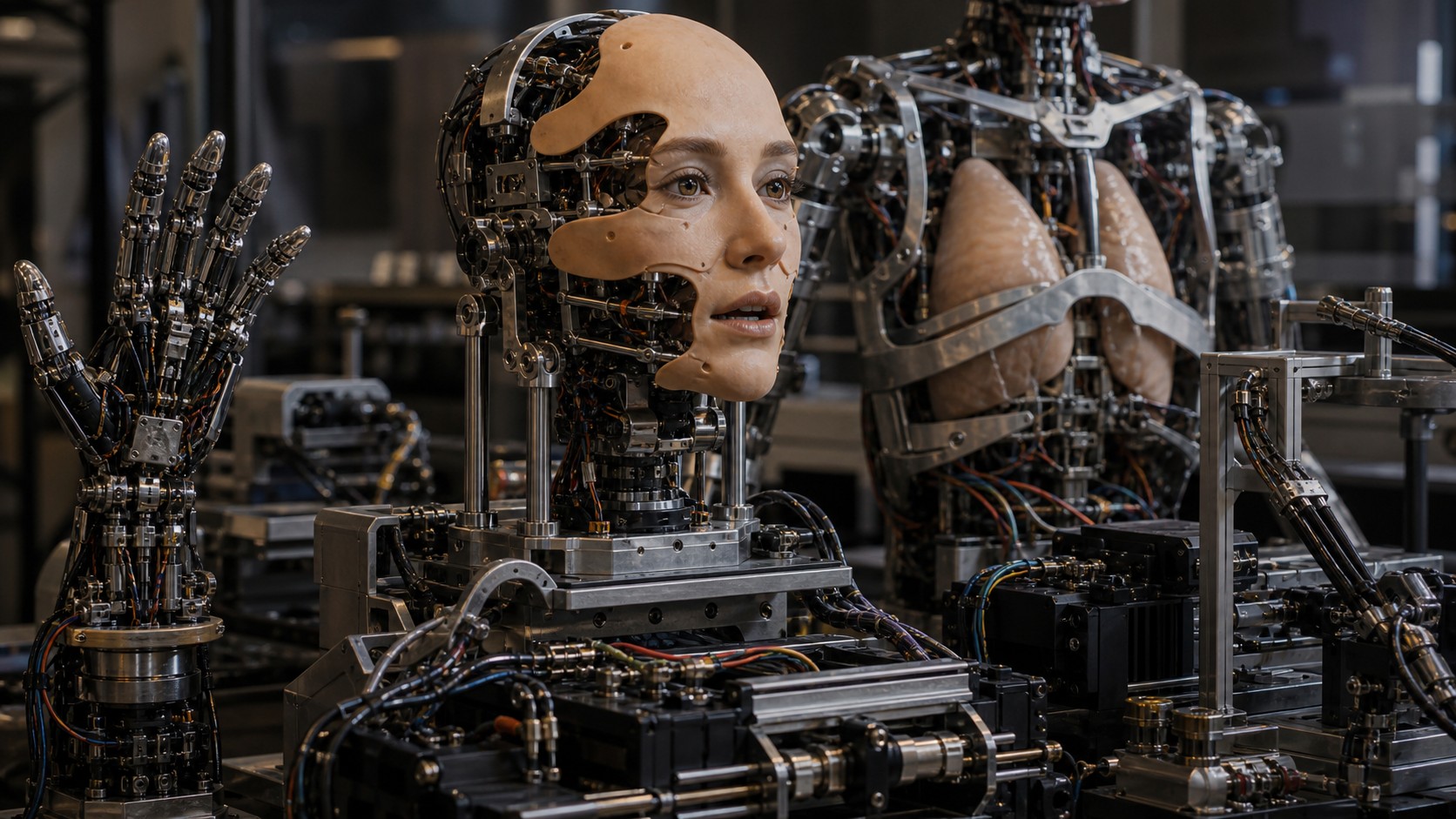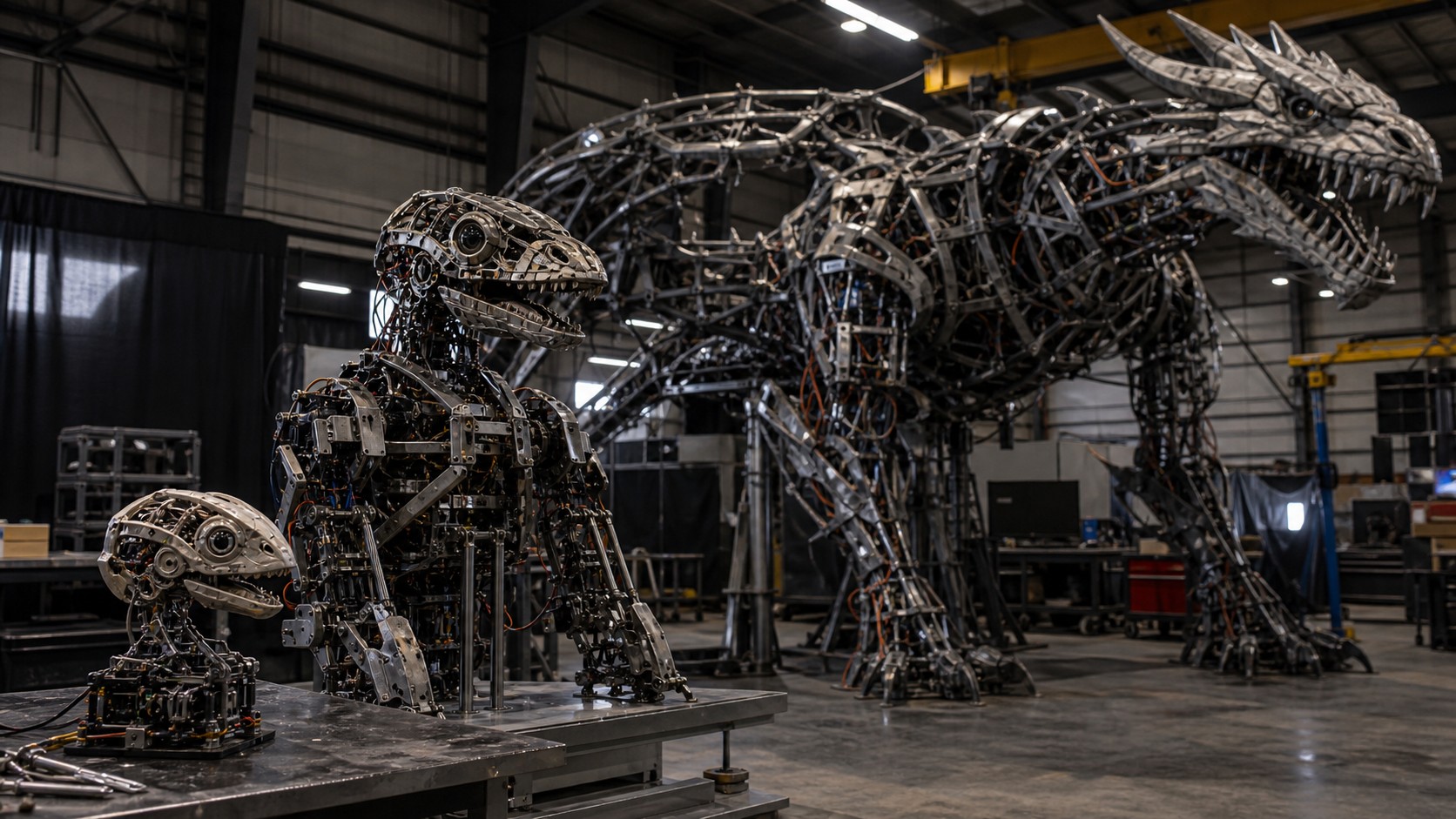
From Hobby Builds to Theme Park Giants: Scaling Animatronics Step by Step is really a guide to making hidden engineering behave like visible life. The parts may be metal, silicone, code, wire, and carefully chosen fasteners, but the goal is not to show off the parts. The goal is to make a character move with enough purpose, weight, and timing that a viewer stops thinking about machinery and starts reading intention.
A: Standardize modules (joints, brackets, wiring) so you can repeat builds without redesigning everything.
A: Servos for compact precision, DC + encoder for robust torque, pneumatics for snappy impacts—match to duty cycle and noise limits.
A: Tight homing, thermal management, health telemetry, and routine “golden cycle” checks between show blocks.
A: Aim for comfortable overhead (commonly 2× on paper), then validate with worst-case payload and friction after skins are installed.
A: Treating wiring, connectors, and service access as “later.” They become the project at large scale.
A: Improve stiffness, reduce backlash, tune control loops conservatively, and add motion smoothing (jerk limits).
A: Quick-access panels, labeled harnesses, modular swaps, and fault logs that point to a specific axis or sensor.
A: Use a single show timeline, deterministic triggers, and time sync across controllers—avoid “best effort” timing.
A: Cut actuator power safely, hold or park axes as designed, and require a deliberate reset + re-home procedure.
A: When cable runs, noise, and troubleshooting costs exceed the complexity of a networked architecture.
A Small Build Teaches Real Lessons
A Small Build Teaches Real Lessons matters because from hobby builds to theme park giants is judged by what an audience can feel before it understands the mechanism. For this hobby to giant progression approach, the designer starts with the motion the audience should believe in, then checks whether the frame, actuator, control signal, and outer material can all support that promise. A choice that looks clever on the bench can become difficult once heat, service access, skin resistance, calibration, and repeated cycles enter the build. When the answer is yes, the engineering starts to disappear and the performance becomes easier to trust.
In a practical shop, a small build teaches real lessons is less a theory than a decision that shows up in brackets, wiring, timing, and surface behavior. A choice that looks clever on the bench can become difficult once heat, service access, skin resistance, calibration, and repeated cycles enter the build. The best animatronic work usually comes from small tests that reveal where the movement feels heavy, where it feels nervous, and where the mechanism is asking the material to do too much. When the answer is no, the fix may be mechanical, electronic, artistic, or simply a calmer timing curve.
Tabletop Mechanisms Build Confidence
In a practical shop, tabletop mechanisms build confidence is less a theory than a decision that shows up in brackets, wiring, timing, and surface behavior. The best animatronic work usually comes from small tests that reveal where the movement feels heavy, where it feels nervous, and where the mechanism is asking the material to do too much. That is why professional builders keep returning to the same question: does this choice make the character more convincing, more reliable, and easier to maintain? When the answer is no, the fix may be mechanical, electronic, artistic, or simply a calmer timing curve.
Builders learn quickly that tabletop mechanisms build confidence cannot be separated from the character’s job, the viewing distance, and the number of times the figure must perform. That is why professional builders keep returning to the same question: does this choice make the character more convincing, more reliable, and easier to maintain? For this hobby to giant progression approach, the designer starts with the motion the audience should believe in, then checks whether the frame, actuator, control signal, and outer material can all support that promise. Seen this way, the component is not just hardware; it is part of the audience’s emotional read of the figure.
The useful way to think about tabletop mechanisms build confidence is to connect it to the visible illusion rather than treating it as an isolated part. For this hobby to giant progression approach, the designer starts with the motion the audience should believe in, then checks whether the frame, actuator, control signal, and outer material can all support that promise. A choice that looks clever on the bench can become difficult once heat, service access, skin resistance, calibration, and repeated cycles enter the build. This is the difference between a moving assembly and an animatronic presence that feels intentional.
Human Scale Adds Risk and Weight
Builders learn quickly that human scale adds risk and weight cannot be separated from the character’s job, the viewing distance, and the number of times the figure must perform. For this hobby to giant progression approach, the designer starts with the motion the audience should believe in, then checks whether the frame, actuator, control signal, and outer material can all support that promise. A choice that looks clever on the bench can become difficult once heat, service access, skin resistance, calibration, and repeated cycles enter the build. Seen this way, the component is not just hardware; it is part of the audience’s emotional read of the figure.
The useful way to think about human scale adds risk and weight is to connect it to the visible illusion rather than treating it as an isolated part. A choice that looks clever on the bench can become difficult once heat, service access, skin resistance, calibration, and repeated cycles enter the build. The best animatronic work usually comes from small tests that reveal where the movement feels heavy, where it feels nervous, and where the mechanism is asking the material to do too much. This is the difference between a moving assembly and an animatronic presence that feels intentional.
Public Shows Demand Repeatability
The useful way to think about public shows demand repeatability is to connect it to the visible illusion rather than treating it as an isolated part. The best animatronic work usually comes from small tests that reveal where the movement feels heavy, where it feels nervous, and where the mechanism is asking the material to do too much. That is why professional builders keep returning to the same question: does this choice make the character more convincing, more reliable, and easier to maintain? This is the difference between a moving assembly and an animatronic presence that feels intentional.
Public Shows Demand Repeatability matters because from hobby builds to theme park giants is judged by what an audience can feel before it understands the mechanism. That is why professional builders keep returning to the same question: does this choice make the character more convincing, more reliable, and easier to maintain? For this hobby to giant progression approach, the designer starts with the motion the audience should believe in, then checks whether the frame, actuator, control signal, and outer material can all support that promise. When the answer is yes, the engineering starts to disappear and the performance becomes easier to trust.
Large Figures Need Teams
Large Figures Need Teams matters because from hobby builds to theme park giants is judged by what an audience can feel before it understands the mechanism. For this hobby to giant progression approach, the designer starts with the motion the audience should believe in, then checks whether the frame, actuator, control signal, and outer material can all support that promise. A choice that looks clever on the bench can become difficult once heat, service access, skin resistance, calibration, and repeated cycles enter the build. When the answer is yes, the engineering starts to disappear and the performance becomes easier to trust.
In a practical shop, large figures need teams is less a theory than a decision that shows up in brackets, wiring, timing, and surface behavior. A choice that looks clever on the bench can become difficult once heat, service access, skin resistance, calibration, and repeated cycles enter the build. The best animatronic work usually comes from small tests that reveal where the movement feels heavy, where it feels nervous, and where the mechanism is asking the material to do too much. When the answer is no, the fix may be mechanical, electronic, artistic, or simply a calmer timing curve.
Builders learn quickly that large figures need teams cannot be separated from the character’s job, the viewing distance, and the number of times the figure must perform. The best animatronic work usually comes from small tests that reveal where the movement feels heavy, where it feels nervous, and where the mechanism is asking the material to do too much. That is why professional builders keep returning to the same question: does this choice make the character more convincing, more reliable, and easier to maintain? Seen this way, the component is not just hardware; it is part of the audience’s emotional read of the figure.
Documentation Becomes Survival Gear
In a practical shop, documentation becomes survival gear is less a theory than a decision that shows up in brackets, wiring, timing, and surface behavior. The best animatronic work usually comes from small tests that reveal where the movement feels heavy, where it feels nervous, and where the mechanism is asking the material to do too much. That is why professional builders keep returning to the same question: does this choice make the character more convincing, more reliable, and easier to maintain? When the answer is no, the fix may be mechanical, electronic, artistic, or simply a calmer timing curve.
Builders learn quickly that documentation becomes survival gear cannot be separated from the character’s job, the viewing distance, and the number of times the figure must perform. That is why professional builders keep returning to the same question: does this choice make the character more convincing, more reliable, and easier to maintain? For this hobby to giant progression approach, the designer starts with the motion the audience should believe in, then checks whether the frame, actuator, control signal, and outer material can all support that promise. Seen this way, the component is not just hardware; it is part of the audience’s emotional read of the figure.
Every Scale Has Its Own Craft
Builders learn quickly that every scale has its own craft cannot be separated from the character’s job, the viewing distance, and the number of times the figure must perform. For this hobby to giant progression approach, the designer starts with the motion the audience should believe in, then checks whether the frame, actuator, control signal, and outer material can all support that promise. A choice that looks clever on the bench can become difficult once heat, service access, skin resistance, calibration, and repeated cycles enter the build. Seen this way, the component is not just hardware; it is part of the audience’s emotional read of the figure.
The useful way to think about every scale has its own craft is to connect it to the visible illusion rather than treating it as an isolated part. A choice that looks clever on the bench can become difficult once heat, service access, skin resistance, calibration, and repeated cycles enter the build. The best animatronic work usually comes from small tests that reveal where the movement feels heavy, where it feels nervous, and where the mechanism is asking the material to do too much. This is the difference between a moving assembly and an animatronic presence that feels intentional.
The Step Up Is a Mindset Shift
The useful way to think about the step up is a mindset shift is to connect it to the visible illusion rather than treating it as an isolated part. The best animatronic work usually comes from small tests that reveal where the movement feels heavy, where it feels nervous, and where the mechanism is asking the material to do too much. That is why professional builders keep returning to the same question: does this choice make the character more convincing, more reliable, and easier to maintain? This is the difference between a moving assembly and an animatronic presence that feels intentional.
The Step Up Is a Mindset Shift matters because from hobby builds to theme park giants is judged by what an audience can feel before it understands the mechanism. That is why professional builders keep returning to the same question: does this choice make the character more convincing, more reliable, and easier to maintain? For this hobby to giant progression approach, the designer starts with the motion the audience should believe in, then checks whether the frame, actuator, control signal, and outer material can all support that promise. When the answer is yes, the engineering starts to disappear and the performance becomes easier to trust.
The Practical Takeaway
The strongest lesson in from hobby builds to theme park giants: scaling animatronics step by step is that animatronics rewards integrated thinking. A part is never only a part after it is installed inside a figure. It affects timing, service, sound, heat, skin behavior, safety, and the way the audience interprets the character. Builders who keep those relationships visible make better decisions and spend less time fighting surprises late in the project.
That is also what makes the field so satisfying. Animatronics sits between sculpture, machine design, theatrical timing, controls, and maintenance reality. When those disciplines support one another, even a simple mechanism can feel expressive. When they compete, even expensive hardware can look lifeless. The craft is learning how to make every layer serve the performance.