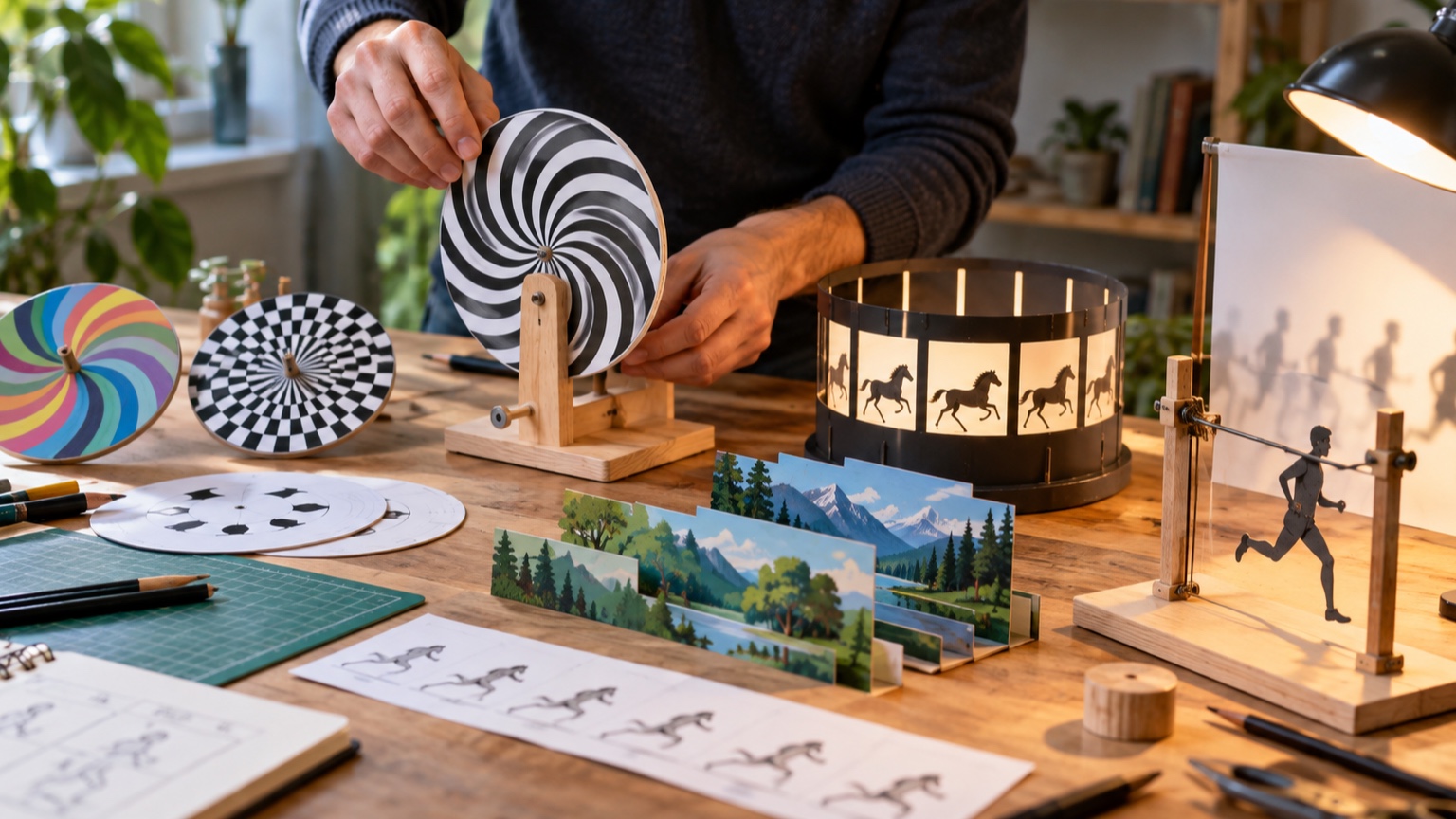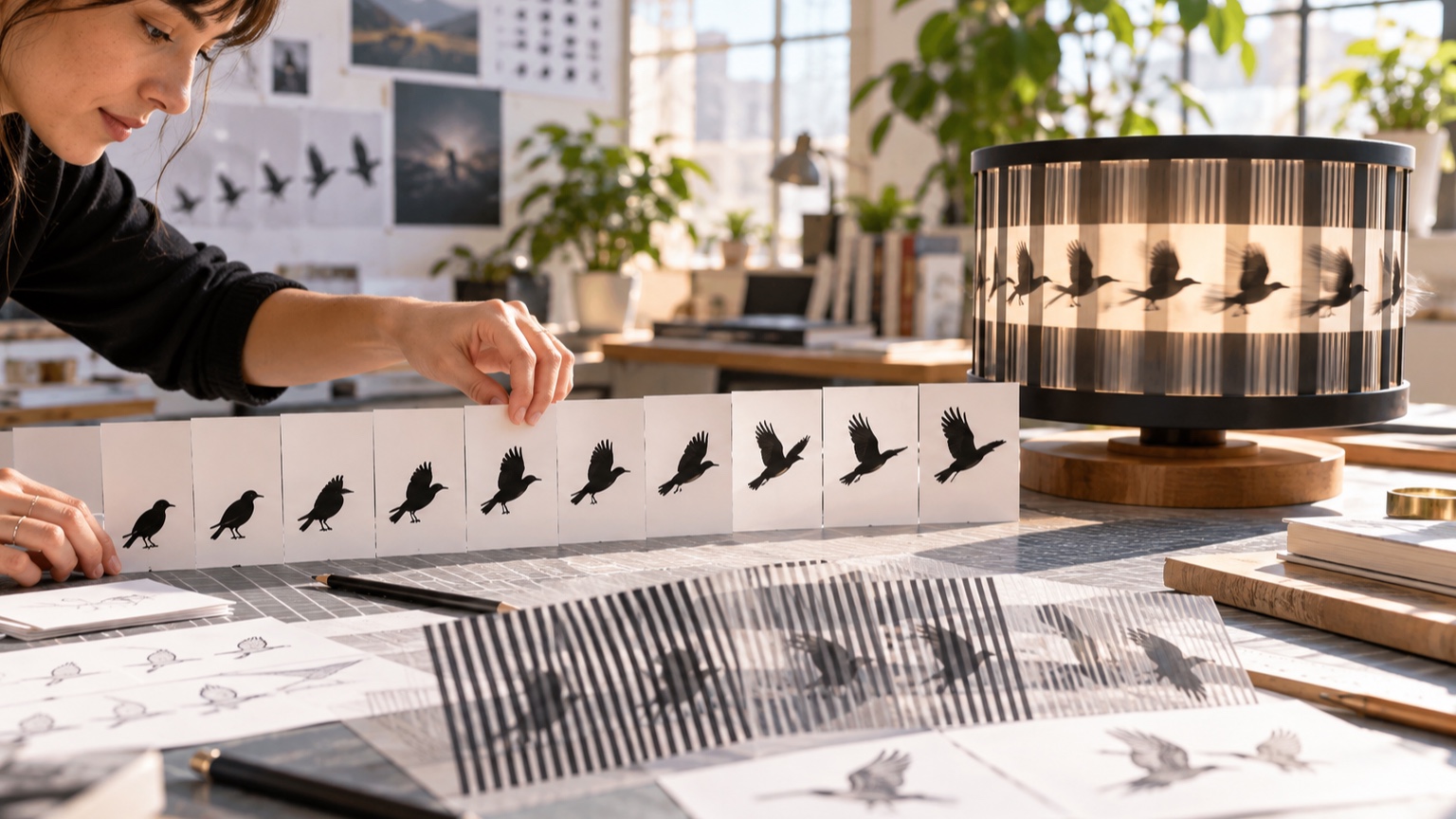
Motion Illusion Design Basics: How to Make Still Images Look Like They Move
Make still images appear to move by designing readable phases, spacing, loops, contrast, masking, lighting, and presentation around human perception.

Where Mechanics Meet Magic
Make still images appear to move by designing readable phases, spacing, loops, contrast, masking, lighting, and presentation around human perception.
Understand how motion illusions use sequence, contrast, occlusion, light, sound, and viewer position to make change feel continuous or physically larger.
Create expressive character faces by coordinating gaze, brows, lids, cheeks, mouth, jaw, head movement, timing, and a repeatable neutral pose.
Learn how expressive characters feel alive through attention, neutral baselines, coordinated facial regions, timing, asymmetry, breath, motion limits, and calibration.
A beginner-friendly guide to drawing facial expressions through head construction, brows, eyelids, gaze, cheeks, mouth, jaw, asymmetry, timing, and reference.
Create memorable human characters through specific habits, visual hierarchy, contradiction, posture, facial relationships, wardrobe evidence, objects, and behavior.
Essential human character design principles covering observation, gesture, balance, proportion, anatomy, faces, hands, clothing, variation, stylization, and consistency.
A complete human character design process covering premise, observation, proportion, face, gesture, wardrobe, hands, age, expressions, movement, and production handoff.
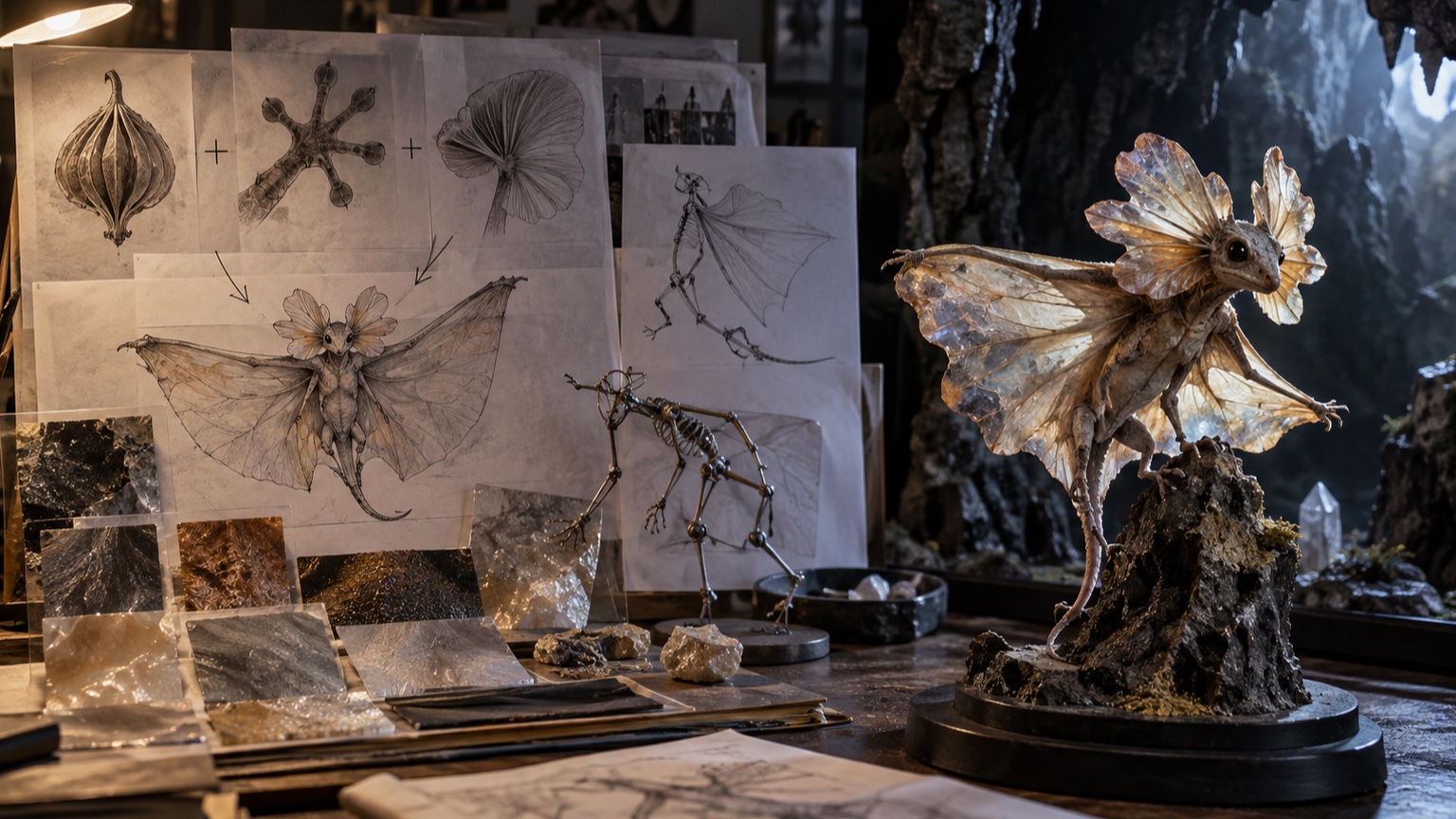
A repeatable concept-development method for creating original creatures from unusual problems, transformed references, constraints, and connected consequences.
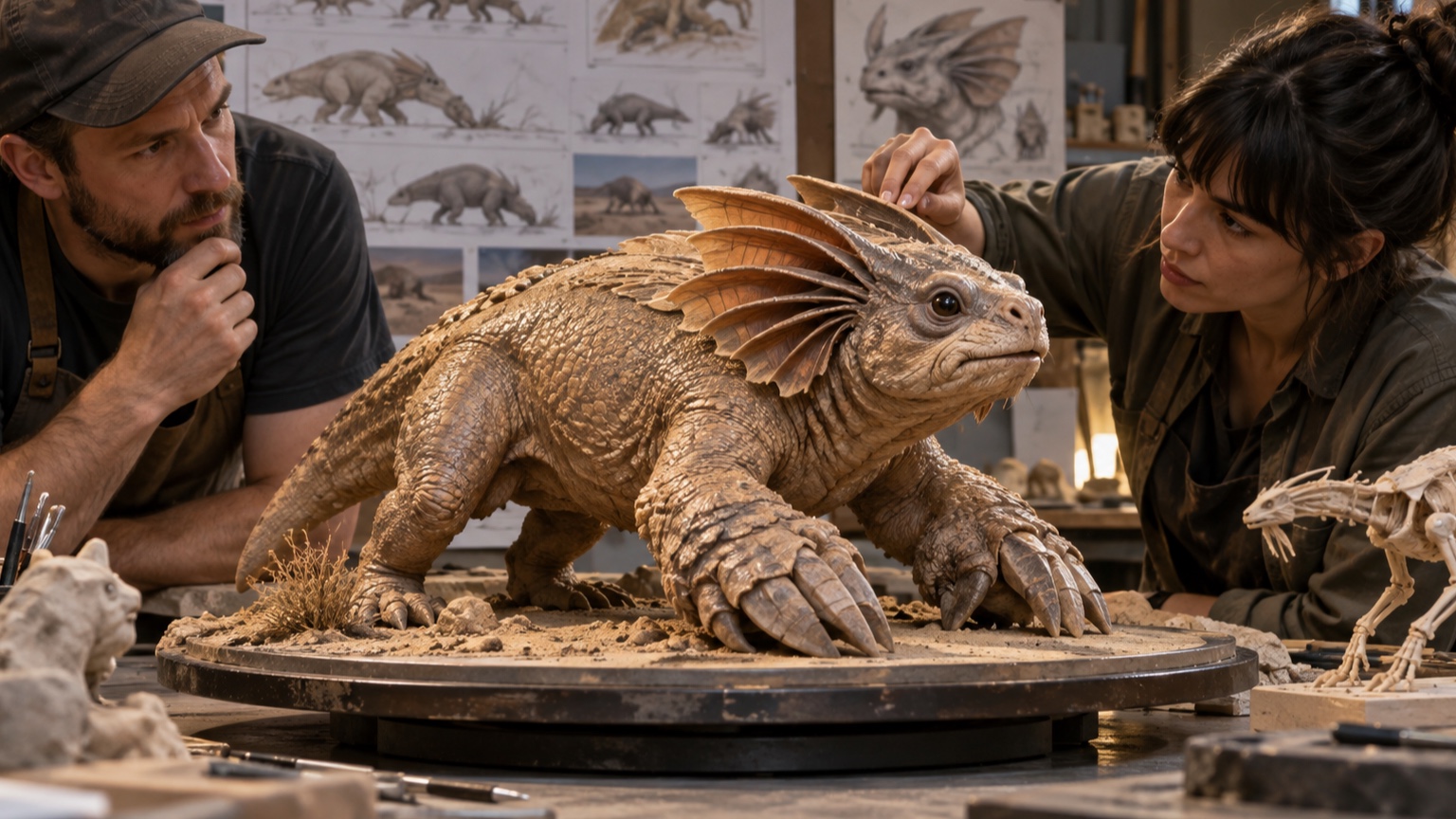
Learn how memorable creatures combine a readable body plan, emotional point of view, signature behavior, selective detail, and consistent performance.
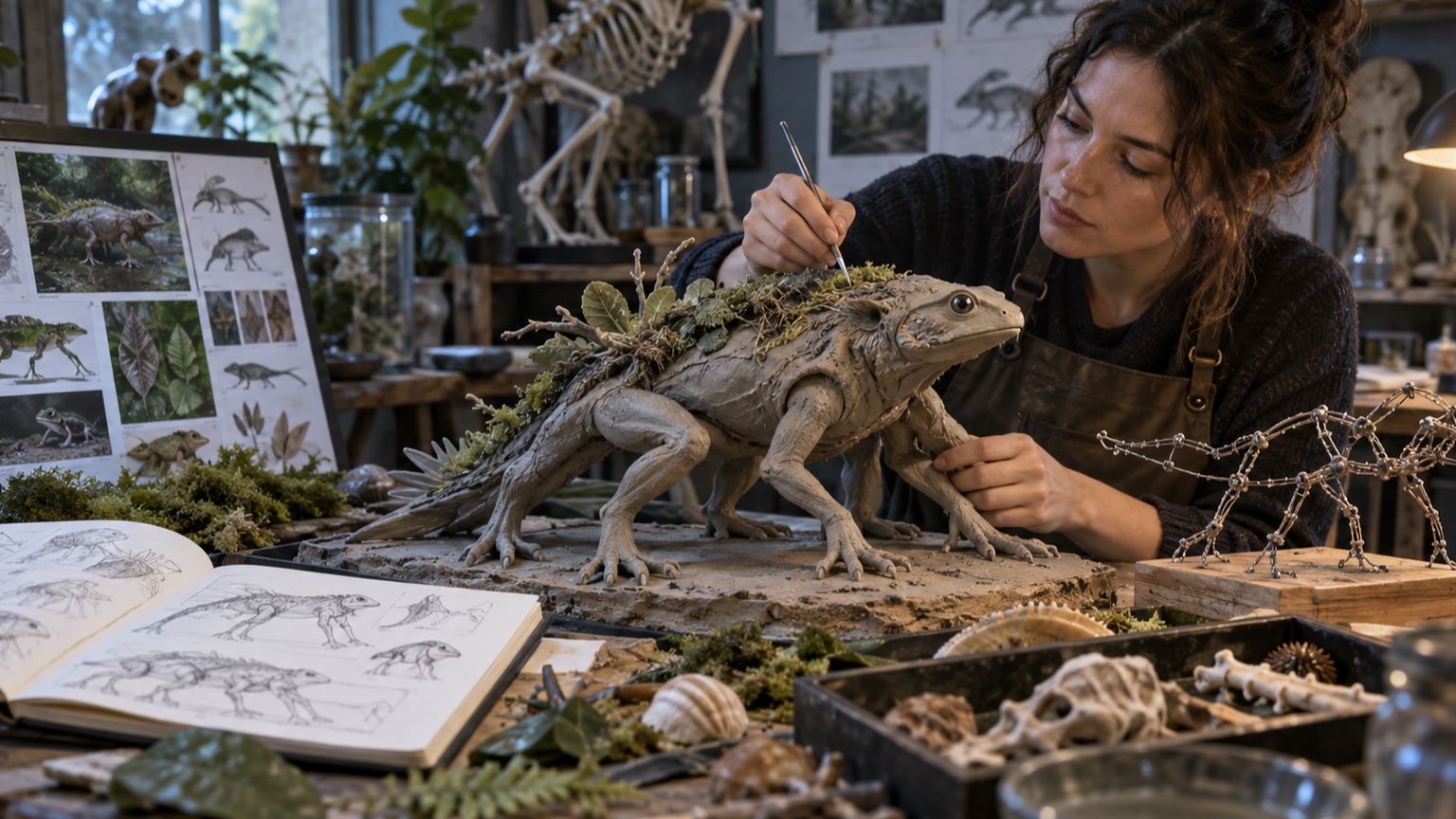
A complete beginner process for designing an original creature through habitat, anatomy, locomotion, feeding, senses, behavior, surface, and build-ready testing.
A practical method for making a character distinctive through contrast, silhouette, visual hierarchy, signature behavior, and disciplined presentation.